 Oct 29, 2025


In today's rapidly evolving digital landscape, cybersecurity threats are becoming increasingly sophisticated. Organizations worldwide are facing an unprecedented surge in cyberattacks, with data breaches costing businesses millions of dollars annually. Vulnerability Assessment and Penetration Testing (VAPT) has emerged as a critical component of any robust cybersecurity strategy, helping organizations identify and remediate security weaknesses before malicious actors can exploit them.
VAPT combines two essential security practices: vulnerability assessment, which systematically identifies security flaws in your infrastructure, and penetration testing, which simulates real-world attacks to evaluate your defense mechanisms. Together, these methodologies provide comprehensive insights into your security posture.
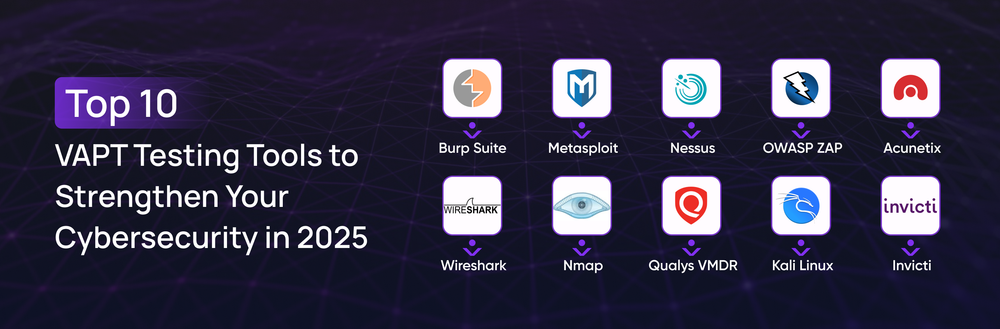
This comprehensive guide explores the top 10 VAPT testing tools for 2025 that can help your organization build a fortress around your digital assets. Whether you're a security professional, IT manager, or business owner, understanding these tools will empower you to make informed decisions about your cybersecurity investments.
Why VAPT Testing is Critical in 2025
Before diving into our top picks, it's essential to understand why VAPT has become indispensable. The cybersecurity landscape has transformed dramatically, with remote work, cloud adoption, and IoT proliferation expanding attack surfaces exponentially. Regular VAPT testing helps organizations achieve compliance with regulations like GDPR, HIPAA, and PCI-DSS while proactively identifying vulnerabilities before they can be weaponized. By investing in robust VAPT tools, companies can reduce incident response costs, protect their reputation, and maintain customer trust in an increasingly security-conscious market.
The Top 10 VAPT Testing Tools for 2025
Burp Suite Professional remains the gold standard for web application security testing in 2025. Developed by PortSwigger, this comprehensive platform combines automated scanning with powerful manual testing capabilities, making it the tool of choice for security professionals worldwide.
Key Features:
- Advanced web vulnerability scanner with intelligent crawling capabilities
- Intruder tool for customized attacks and fuzzing
- Intercepting proxy for analyzing and modifying HTTP/HTTPS traffic
- Extensive extension marketplace (BApp Store) for specialized functionality
- Collaboration features for team-based testing
- REST API support for CI/CD integration
Best For: Web application penetration testing, API security testing, and comprehensive security assessments of modern web applications.
Metasploit continues to dominate as the most widely used penetration testing framework. With thousands of exploit modules and an active community, it provides unparalleled capabilities for testing network security, developing custom exploits, and validating vulnerabilities.
Key Features:
- Extensive database of over 2,500 exploits and payloads
- Meterpreter for advanced post-exploitation
- Automated exploitation workflows
- Integration with third-party security tools
- Custom exploit development framework
- Comprehensive reporting capabilities
Best For: Network penetration testing, exploit development, and security research. Ideal for both beginners and advanced penetration testers.
Tenable's Nessus Professional is the industry's most comprehensive vulnerability scanner, trusted by organizations of all sizes. With coverage for over 65,000 CVEs and continuous updates, it provides unmatched vulnerability detection accuracy.
Key Features:
- Comprehensive vulnerability database with daily updates
- Configuration auditing for compliance frameworks
- Cloud infrastructure scanning (AWS, Azure, GCP)
- Malware detection and removal capabilities
- Mobile device scanning support
- Customizable scan templates and policies
- Integration with SIEM and ticketing systems
Best For: Enterprise vulnerability management, compliance auditing (PCI-DSS, HIPAA, CIS), and continuous security monitoring.
OWASP ZAP has evolved into one of the most powerful free and open-source web application security testing tools. Maintained by the OWASP community, it offers professional-grade features without licensing costs, making it perfect for organizations of all sizes.
Key Features:
- Automated scanner for common web vulnerabilities
- Passive and active scanning modes
- AJAX spider for modern JavaScript applications
- Fuzzing capabilities for input validation testing
- API security testing (REST, SOAP, GraphQL)
- Docker images for easy deployment
- Extensive marketplace with community add-ons
Best For: Budget-conscious organizations, DevSecOps integration, CI/CD pipeline security testing, and educational purposes.
Acunetix stands out as a premium automated web vulnerability scanner with exceptional crawling capabilities and minimal false positives. Its advanced detection algorithms and developer-friendly features make it a favorite among DevSecOps teams.
Key Features:
- Industry-leading crawling engine for complex web applications
- Accurate detection with very low false-positive rates
- Out-of-band vulnerability testing
- Network security scanning integration
- Issue tracker integration (Jira, GitHub, GitLab)
- Comprehensive compliance reporting
- Automated multi-site scanning
Best For: Large-scale web application portfolios, continuous security testing, and organizations requiring accurate automated scanning with minimal manual verification.
Wireshark remains the world's most popular network protocol analyzer, essential for any security professional's toolkit. Its deep packet inspection capabilities make it invaluable for network security analysis, troubleshooting, and forensic investigations.
Key Features:
- Deep inspection of hundreds of protocols
- Live capture and offline analysis
- Powerful display filters for precise packet analysis
- VoIP analysis capabilities
- Decryption support for various protocols (SSL/TLS with keys)
- Export features for various file formats
- Command-line version (TShark) for automation
Best For: Network traffic analysis, security incident investigation, protocol development, and network troubleshooting.
Nmap is the legendary network scanning tool that has been the cornerstone of security assessments for over two decades. Its versatility and powerful scripting engine make it indispensable for network reconnaissance and security auditing.
Key Features:
- Flexible host and port discovery
- Service and version detection
- OS fingerprinting capabilities
- NSE (Nmap Scripting Engine) with 600+ scripts
- Stealth scanning techniques
- IPv6 support
- Zenmap GUI for visualization
Best For: Network reconnaissance, asset discovery, security auditing, and network inventory management.
Qualys Vulnerability Management, Detection, and Response (VMDR) represents the next generation of vulnerability management. As a cloud-native platform, it provides continuous visibility and risk-based prioritization for modern hybrid environments.
Key Features:
- Cloud-based scanning requiring no infrastructure
- Real-time asset discovery and inventory
- TruRisk scoring for prioritization
- Automated patch management integration
- Container and cloud workload scanning
- Threat intelligence integration
- Compliance dashboard for multiple frameworks
Best For: Enterprise vulnerability management, cloud security, compliance management, and organizations requiring scalable scanning without hardware investments.
While not a single tool, Kali Linux deserves recognition as the most comprehensive penetration testing platform. This Debian-based distribution comes pre-loaded with over 600 security tools, providing a complete testing environment out of the box.
Key Features:
- 600+ pre-installed penetration testing tools
- Regular updates and package management
- Multiple deployment options (bare metal, VM, cloud, mobile)
- Customizable builds with Kali Meta packages
- NetHunter for mobile penetration testing
- ARM support for Raspberry Pi deployments
- Extensive documentation and community support
Best For: Professional penetration testers, security researchers, and organizations building dedicated security testing infrastructure.
Invicti revolutionizes web application security testing with its proof-based scanning technology, which automatically verifies vulnerabilities to eliminate false positives. This accuracy-focused approach saves security teams countless hours of manual verification.
Key Features:
- Proof-based scanning for zero false positives
- Automatic verification of detected vulnerabilities
- Comprehensive OWASP Top 10 coverage
- IAST (Interactive Application Security Testing) capabilities
- Authenticated scanning for complex applications
- REST API for CI/CD integration
- Detailed remediation guidance
Best For: DevSecOps teams, enterprises with large application portfolios, and organizations requiring high-confidence automated scanning results.
Choosing the Right VAPT Tool for Your Organization
Selecting the appropriate VAPT tools depends on several factors unique to your organization. Consider your budget constraints, technical expertise available in-house, the complexity of your IT infrastructure, specific compliance requirements, and whether you need continuous monitoring or periodic assessment. Many organizations adopt a layered approach, combining multiple tools to achieve comprehensive coverage across different attack surfaces.
For startups and small businesses, beginning with open-source tools like OWASP ZAP, Nmap, and Wireshark provides excellent value while building internal expertise. Medium-sized enterprises typically benefit from investing in commercial platforms like Nessus Professional or Acunetix for more comprehensive automated scanning. Large enterprises often require enterprise-grade solutions like Qualys VMDR or Burp Suite Enterprise, which offer scalability, collaboration features, and advanced reporting capabilities.
Best Practices for Implementing VAPT
Successful VAPT implementation extends beyond tool selection. Establish a regular testing schedule aligned with your risk profile—quarterly for high-risk environments, bi-annually for moderate risk scenarios. Always obtain proper authorization before conducting penetration tests to avoid legal complications. Create a comprehensive scope document that clearly defines test boundaries, systems to be tested, and acceptable testing windows.
Integrate VAPT into your software development lifecycle through DevSecOps practices, enabling early vulnerability detection. Maintain detailed documentation of all findings, remediation efforts, and retest results. Ensure your security team receives ongoing training to stay current with evolving threats and tool capabilities. Finally, establish clear escalation procedures for critical vulnerabilities requiring immediate attention.
Ready to Strengthen Your Cybersecurity?
At Gramosoft, we understand that implementing effective VAPT testing requires more than just tools—it demands expertise, strategy, and continuous commitment. Our cybersecurity specialists can help you select, deploy, and optimize the right VAPT solutions for your unique environment.
Schedule a Free ConsultationConclusion
The cybersecurity landscape of 2025 demands proactive defense strategies, and VAPT testing stands as your first line of defense against evolving threats. The tools highlighted in this guide represent the pinnacle of vulnerability assessment and penetration testing technology, each offering unique capabilities to address different aspects of security testing.
Remember that tools are only as effective as the expertise behind them. While automation accelerates discovery and reduces manual effort, experienced security professionals remain essential for accurate vulnerability interpretation, exploitation validation, and strategic remediation planning. The most successful organizations combine cutting-edge tools with skilled personnel and comprehensive security policies.
Whether you're just beginning your security testing journey or looking to enhance existing capabilities, investing in robust VAPT tools is no longer optional—it's a business imperative. Start with tools that align with your current needs and maturity level, then expand your toolkit as your security program evolves. The key is to begin now, test regularly, and continuously improve your security posture.
Your organization's data, reputation, and customer trust depend on the strength of your cybersecurity defenses. Don't wait for a breach to take action. Implement comprehensive VAPT testing today and sleep soundly knowing your digital assets are protected.
Frequently Asked Questions
What is the difference between vulnerability assessment and penetration testing?
Vulnerability assessment is an automated process that identifies and catalogs security weaknesses in your systems, while penetration testing involves manual exploitation of these vulnerabilities to determine their real-world impact. VAPT combines both approaches for comprehensive security evaluation.
How often should organizations conduct VAPT testing?
Testing frequency depends on your risk profile and regulatory requirements. High-risk industries like finance and healthcare should conduct VAPT quarterly, while other organizations can test bi-annually or after significant infrastructure changes.
Can I perform VAPT testing without specialized training?
While tools like OWASP ZAP and Nessus are user-friendly, effective VAPT requires cybersecurity knowledge and ethical hacking skills. Consider partnering with experienced professionals or investing in proper training before conducting comprehensive security assessments.
Are free VAPT tools sufficient for enterprise security?
Free tools like OWASP ZAP, Nmap, and Metasploit Community Edition provide excellent capabilities but may lack enterprise features like centralized management, automated workflows, and compliance reporting. Many organizations use a combination of free and commercial tools.