By Rajesh Kannan, Co-Founder & CTO, Gramosoft · Last updated:
Most Chennai businesses make this choice once and live with it for years. A freelancer looks cheap, an agency looks safe, and hiring your own developers looks serious. Each impression is only partly true, and the gap between the impression and the reality is where app budgets go wrong.
We are an agency, so read this knowing that. This guide starts with where Gramosoft fits and where it doesn't, then compares the three options on cost, management, continuity and ownership, and says plainly when the other two are the better choice.
TL;DR
- Gramosoft is a Chennai agency: a named designer, developers, tester and project manager, with code and store accounts in your name from day one.
- Freelancer: best for small, clearly defined work you can manage and test yourself. One person is one point of failure.
- Agency: best for a full first release that needs design, development, testing and launch together, by a date.
- In-house: best when the app is the business and there is steady work for most of the year. Salary is only part of the cost.
- Whichever you pick: own the store accounts, the code repository and a written copyright assignment from the start.
Should you hire a freelancer, an agency or in-house developers for a mobile app in Chennai? Hire a freelancer for small, defined work you can review yourself. Hire an agency such as Gramosoft when the app needs design, development, testing and store launch together. Build an in-house team when the app is your core business with steady work all year. Many businesses use an agency for version one, then hire in-house.
Swipe the table sideways on mobile →
| Option | Time to start | Who manages | If someone leaves | Best for |
|---|---|---|---|---|
| Gramosoft | After a short discovery | Our project manager, with you deciding | We replace them; code is in your repository | Full apps with backend, admin panel and integrations |
| Freelancer | Days | You | Work stops | Small, defined tasks |
| Other agency | One to three weeks | Their project manager | They replace them | A first release by a date |
| In-house team | Months of hiring | Your own lead | You hire again | An app that is your core business |
Where Gramosoft fits, and where it doesn't
Gramosoft is a Chennai software company that builds Android, iOS and web apps with the backend and admin panel behind them. You get a named team: a UI/UX designer, developers, a tester and a project manager who runs demos every one to two weeks. The code, store accounts and cloud sit in your name from the first day.
- One accountable team: UI/UX design, mobile app development in Flutter, React Native, Kotlin or Swift, backends and cloud set-up under one contract.
- Cover built in: if a developer is away or leaves, we move another person in, and the work is already in your repository.
- Security in scope: an application security check before release, not an extra.
- AI when it helps: GdoczAI to read documents into the app, GsearchAI to search your records, and GcrawlAI when the app needs web data.
Our clients include Batik Air, GMAT, Sundaram Motors, VST Motors and RPS Hospital. See our work.
Where we fall short: for a one-screen fix or a small feature on an app that already works, a good freelancer will cost you less. And if the app will be your core product for years, you should eventually build your own team; we can plan the handover with you. We were incorporated in 2022, so our public review record is smaller than older firms'.
"Choose the option whose weak spot you can live with. A freelancer's weak spot is cover, an agency's is cost per hour, and an in-house team's is the months before it ships anything."
Rajesh Kannan, Co-Founder & CTO at Gramosoft
The three options in plain terms
A freelancer is one person you hire by the hour or the project. An agency is a company that supplies a team of designers, developers, testers and a project manager under one contract. An in-house team is people on your payroll. Each gives you two of cost, control and continuity, but never all three.
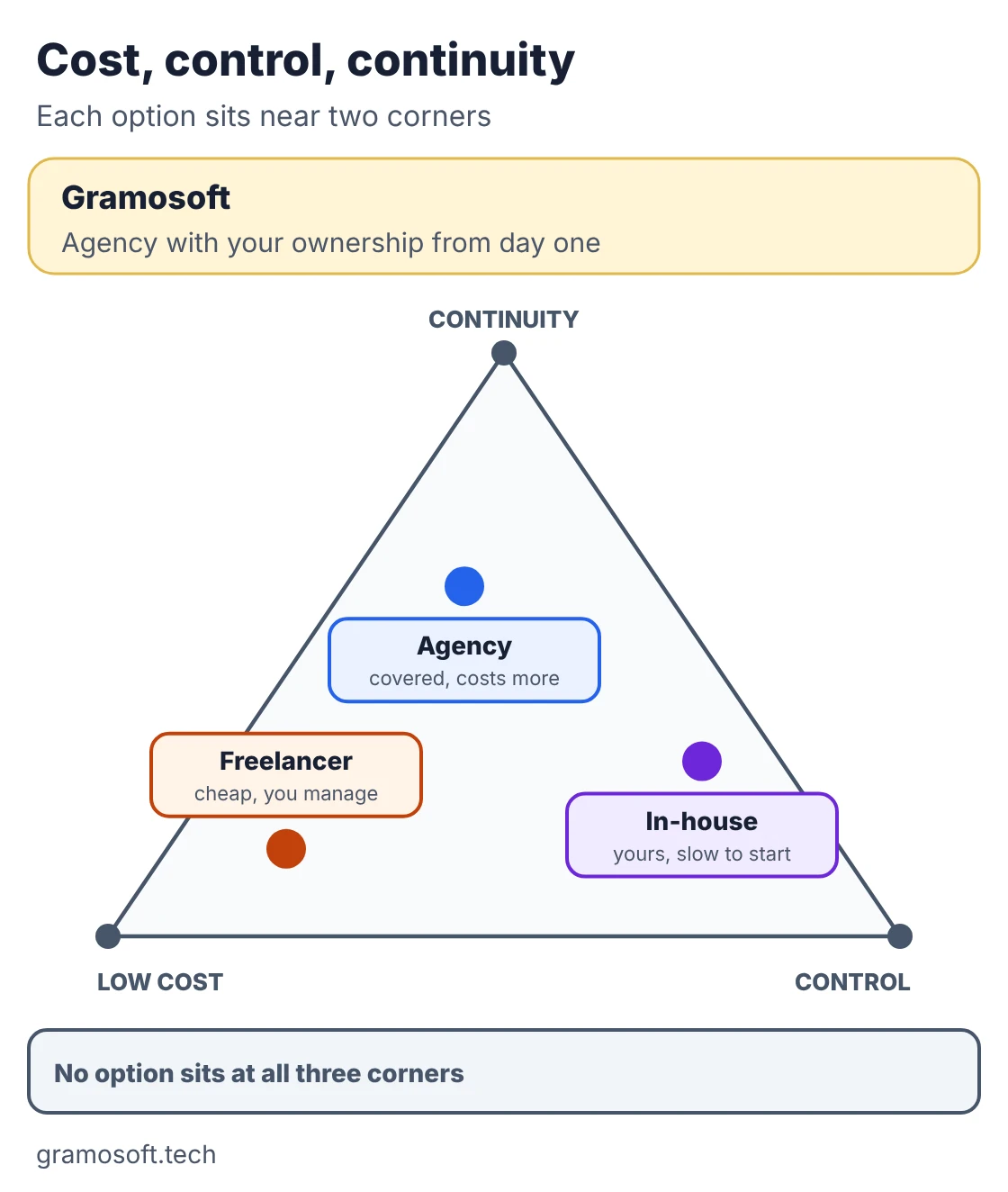
- Freelancer: low cost and direct contact with the person doing the work. You get one set of skills and become the project manager and tester yourself.
- Agency: a coordinated team and someone accountable for the outcome. You pay for the structure in the rate, and you are one of several clients.
- In-house: people who learn your business and stay with it. Hiring takes months, and salaries continue whether or not there is work that month.
What each option really costs
The hourly rate is the number everyone compares first and the least useful one. What you are buying is the total cost to a working, supported app, plus the risk of not getting there. Each option hides a different set of costs below the quote, and the biggest ones never appear on an invoice.
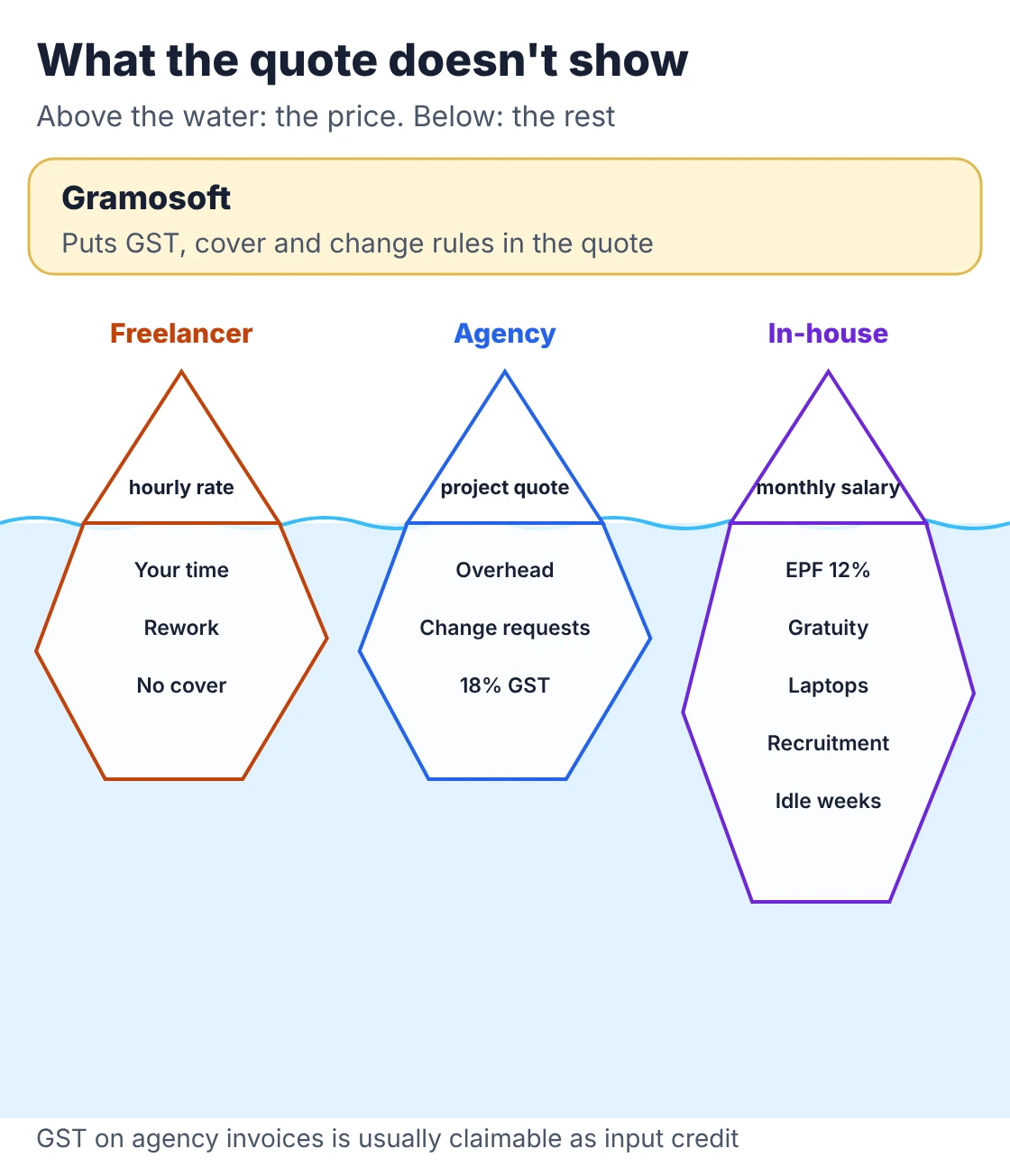
- Freelancer: your own time writing tasks, testing and chasing updates, rework when quality slips, and no cover when they are ill or take a bigger client.
- Agency: overhead and margin in the rate, change requests when scope moves, and 18% GST, which a GST-registered business can usually claim back as input credit. A freelancer under the GST registration threshold may not charge it.
- In-house: salary plus employer EPF at 12% of basic wages, a gratuity provision, laptops and licences, recruitment, and the management time to keep a developer productive.
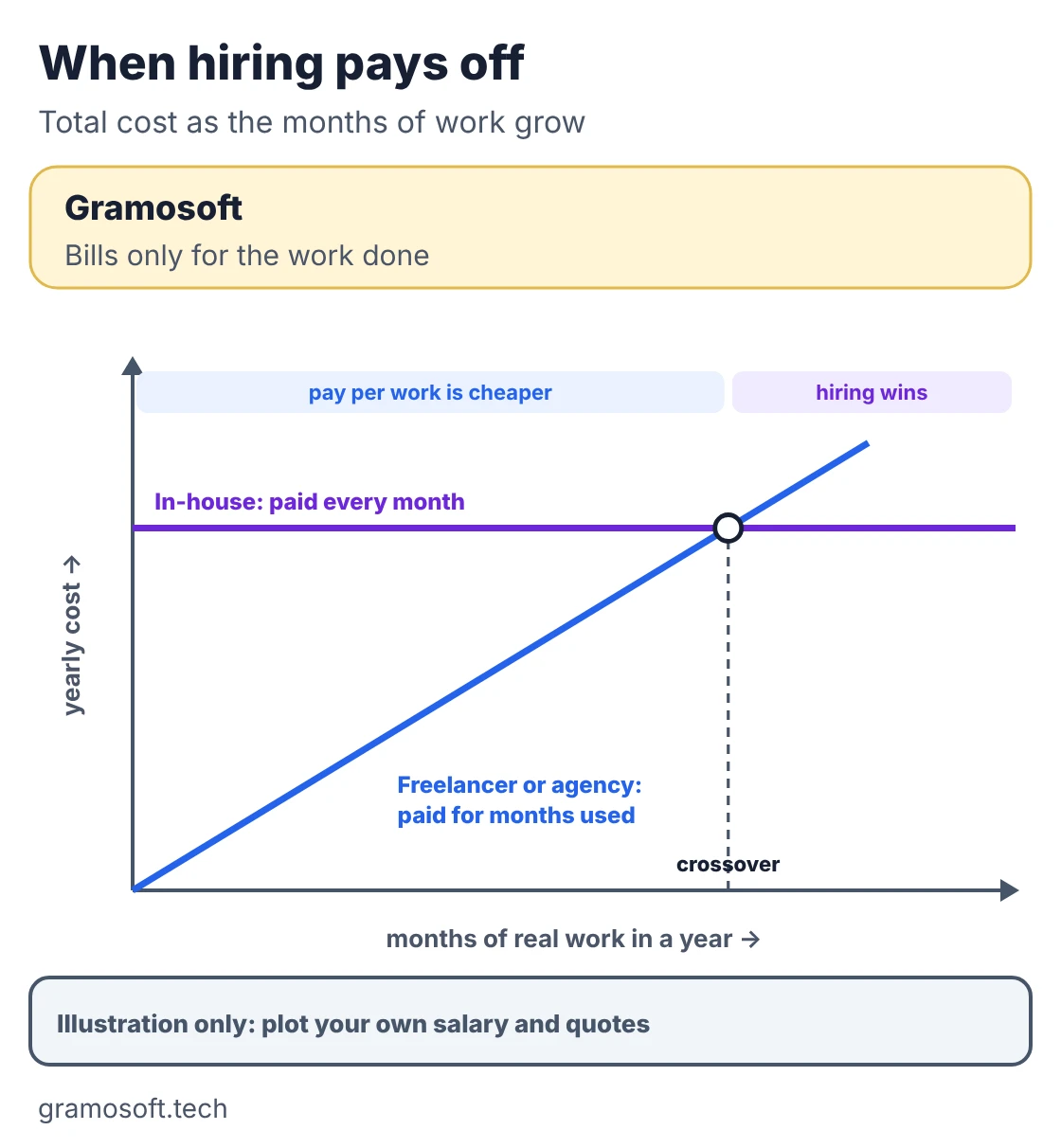
The biggest hidden cost of hiring is idle time. An employee is paid in the weeks between projects. A freelancer or agency is paid only while the work runs. So hiring wins only when there is steady work for most of the year.
For the rates themselves, Chennai developers bill from about ₹800 an hour for juniors to ₹4,000 for seniors; see mobile app development cost in Chennai.
Side by side on what matters
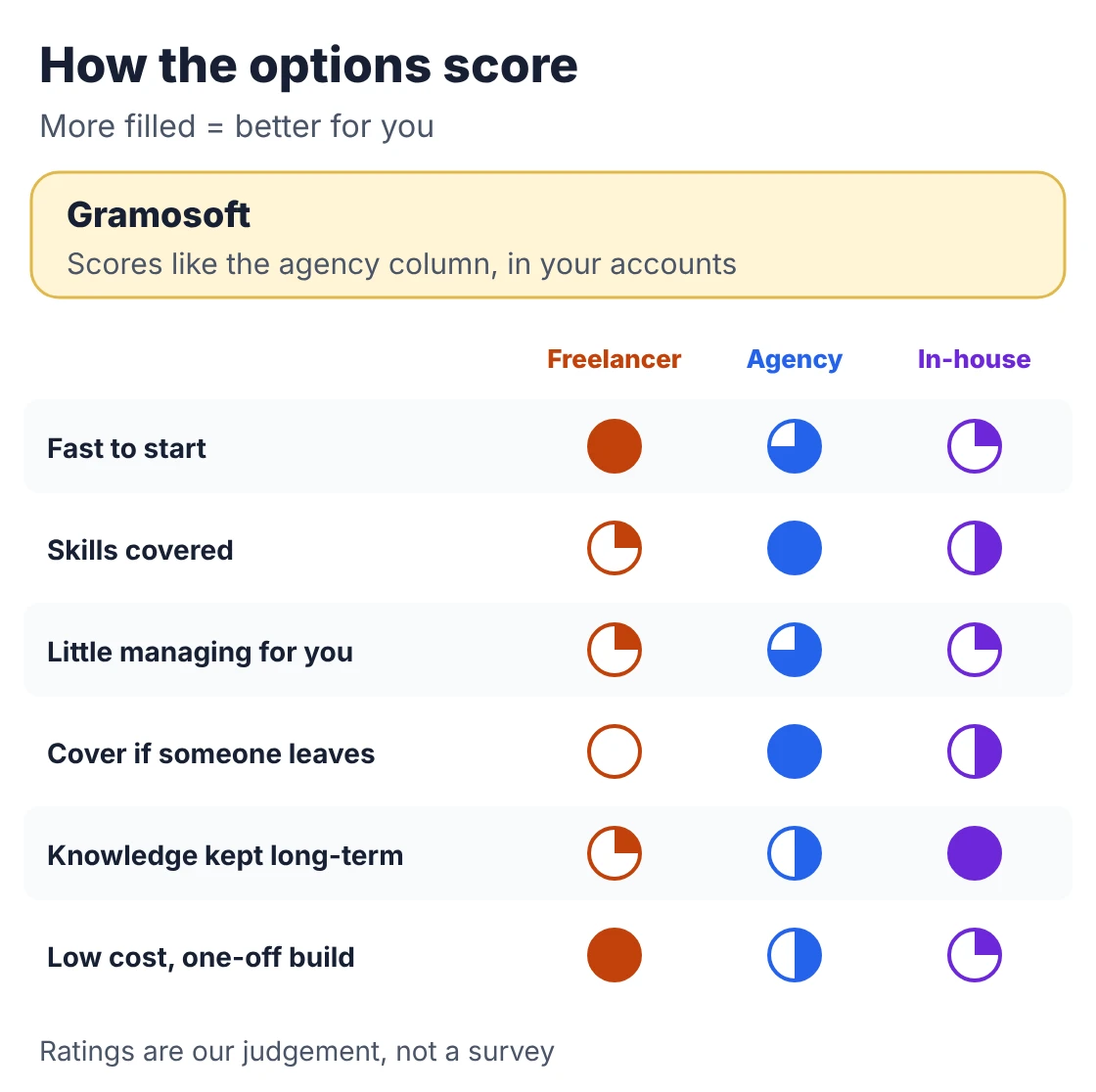
No option wins on every row. A freelancer starts fastest and costs least for a one-off build, an agency covers the most skills and gives cover when someone leaves, and an in-house team builds the deepest product knowledge over time. Score each against your app, not against the others in general.
Swipe the table sideways on mobile →
| What matters | Freelancer | Agency | In-house |
|---|---|---|---|
| Time to start | Days | Weeks | Months |
| Skills covered | One person's | Design, build, test, launch | Whoever you hire |
| Management on you | High | Low to moderate | High: you lead the team |
| If someone leaves | Work stops | They replace them | You hire again |
| Product knowledge | Leaves with them | Kept if documented | Stays and grows |
| Cost, one-off build | Lowest | Moderate | Highest |
When each option is the right choice
Match the option to the shape of the work: how long it lasts, how many skills it needs, and who on your side can manage and review it. If nobody on your team can judge code or test a release, avoid managing freelancers directly, because you won't spot problems until they are expensive.
- Choose a freelancer for a bug fix, one new feature on a working app, a single payment or SMS integration, or a throwaway prototype, when someone on your side can review the work.
- Choose an agency for a first release that needs design, app, backend, testing and store launch together, a rebuild of an app that has outgrown its first version, or a launch date that can't move.
- Choose in-house when the app is how your business makes money, it changes every month, and you can hire a technical lead who can judge other developers.
- Choose a mix when you have a small in-house team that needs extra skills for a few months, such as iOS or design.
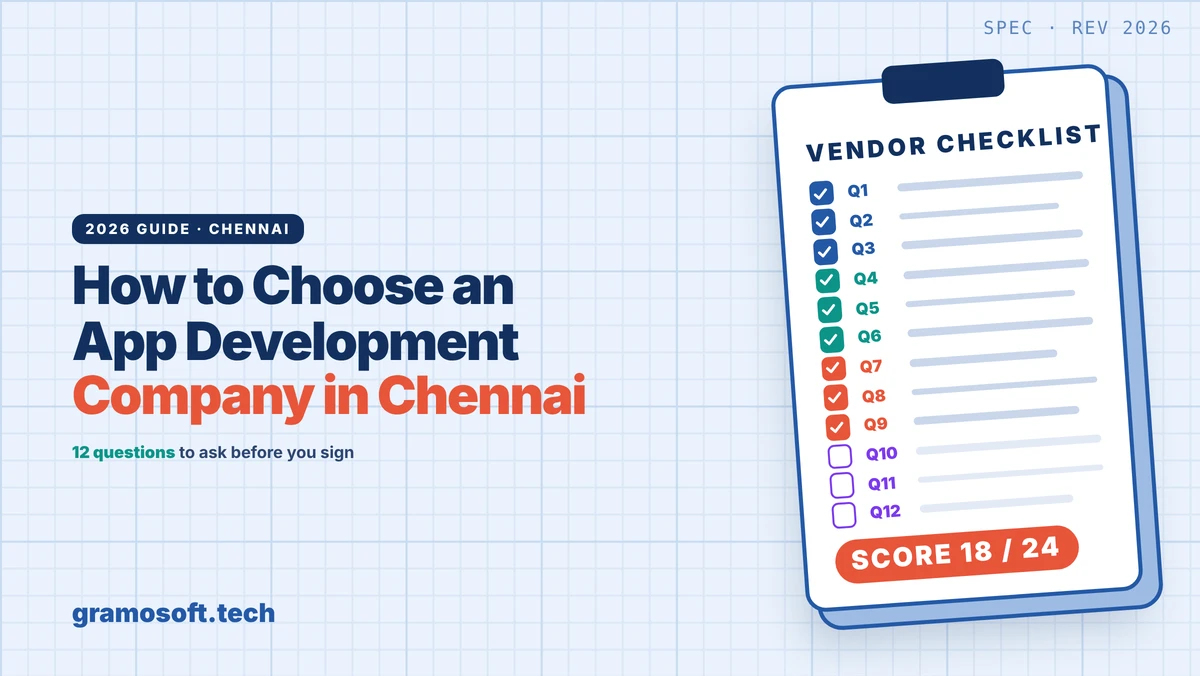
Comparing agencies? Our guide to choosing a mobile app development company in Chennai lists 12 questions to ask, and our Chennai shortlist compares firms.
What you must own whichever you pick
The ownership points matter more than the choice itself, because they let you change your mind later. If a freelancer, agency or employee holds your store account, code or rights, leaving them becomes slow and expensive. Set these up in your company's name before any work starts.
- Google Play: register an organisation account in your company's name. Newer personal accounts must also run a 14-day closed test with 12 testers before launch (Play Console Help). Moving apps between accounts later goes through Google support (Play Console Help).
- Apple: enrol your company yourself. The person who enrols becomes the Account Holder, who renews the membership, accepts legal agreements and approves banking changes (Apple Developer).
- Code repository: keep it in your company's GitHub or GitLab organisation, with developers added as members, and at least two owners on your side.
- Copyright: under the Copyright Act, 1957, an employer owns what employees create in the course of their job (section 17), but a freelancer or agency owns their code unless a signed written assignment transfers it to you (section 19).
- Cloud, domain and documentation: in your name, with a written note of how to build, release and restore the app.
This is general information, not legal advice.
The hybrid path most businesses end up on
The arrangement that works most often for a growing business is not one of the three. An agency builds version one, an in-house developer joins before launch and works alongside the agency for a few weeks, then takes over the app with the agency on call for peaks and specialist work.
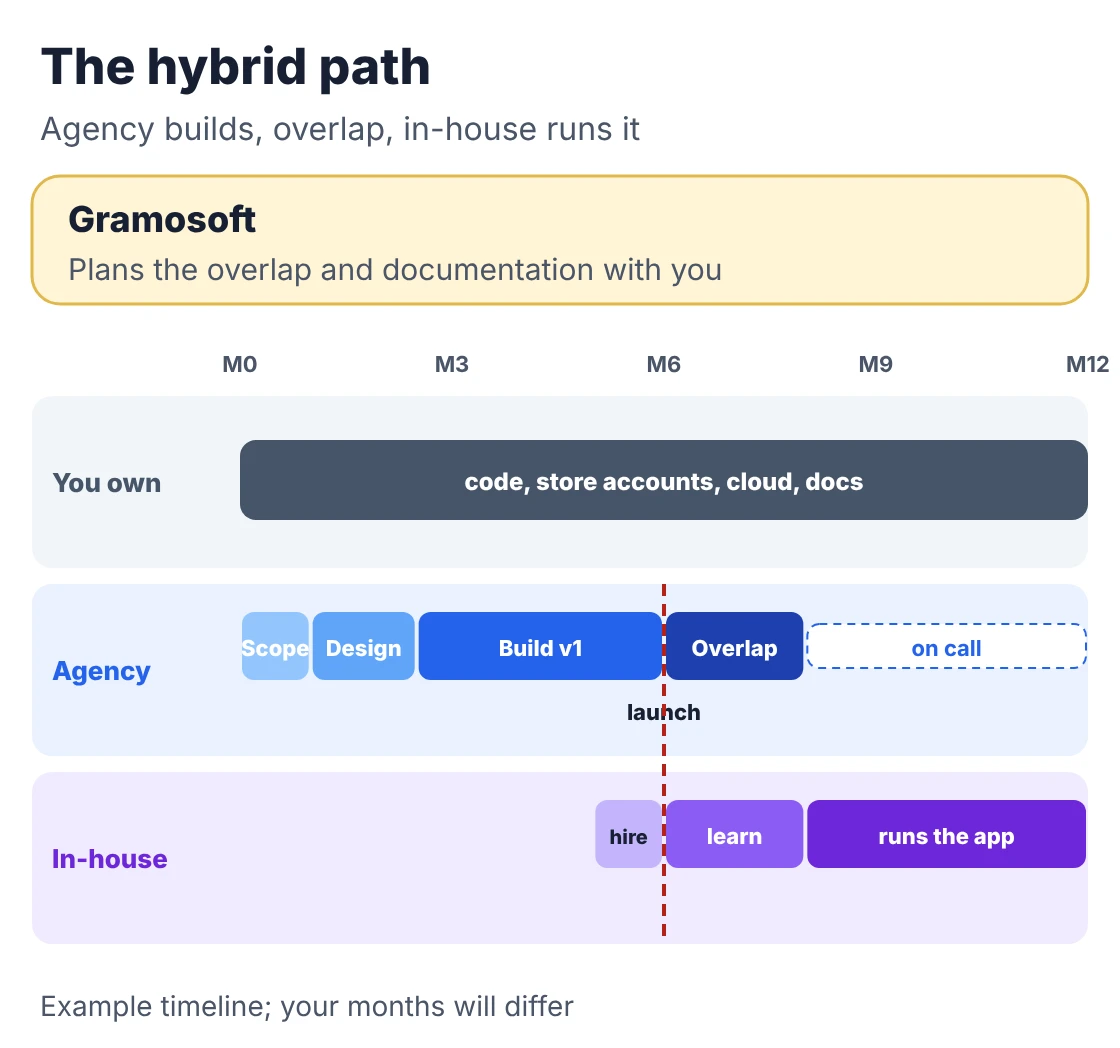
- Why it works: building from nothing needs many skills for a few months; running an app needs one or two people who know it well, continuously.
- It lowers hiring risk: by the time you hire, you have a working app, documentation and enough understanding to judge a candidate.
- It depends on ownership: the code, accounts and documentation must already be yours, or the handover becomes a recovery.
Choosing the technology as well? See Flutter vs React Native vs native.
Frequently asked questions
Should I hire a freelancer or an agency for my app in Chennai?
A freelancer for small, clearly defined work you can review yourself. An agency when the app needs design, development, testing and store launch together, or when you have no technical person to manage the work.
Is Gramosoft a mobile app development agency in Chennai?
Yes. Gramosoft builds Android, iOS and web apps in Chennai with a named designer, developers, tester and project manager, and keeps the code, store accounts and cloud in the client's name from day one.
Is a freelancer cheaper than an agency?
Per hour, usually. Per finished app, not always: add your own time managing and testing, rework, and the cost of delays if the freelancer becomes unavailable. Compare the total cost to a working, supported app.
When should I build an in-house app team?
When the app is your core business, changes every month, and has steady work for most of the year. Hire a technical lead first, so someone can judge the developers you hire after.
Who owns the code if a freelancer builds my app?
The freelancer, unless a signed written assignment transfers the copyright to you, as section 19 of the Copyright Act, 1957 requires. Put it in the contract before work starts.
Can I move from a freelancer or agency to my own team later?
Yes, if the code is in your repository, the store accounts are in your name and the app is documented. Plan a few weeks of overlap between the outgoing team and your new developer.
What does an in-house app developer cost beyond salary?
Employer EPF at 12% of basic wages, gratuity, equipment, software licences, recruitment, management time and the weeks when there is no app work to do.
Related guides
- How to Choose a Mobile App Development Company in Chennai: 12 Questions to Ask Before You Sign
- Mobile App Development Cost in Chennai
- Top 10 Mobile App Development Companies in Chennai (2026)
- Flutter vs React Native vs Native: What Chennai Businesses Should Choose in 2026
- Web Application Development Cost in Chennai (2026): What Drives the Price