Updated 26 November 2026 · programme figures checked against Ministry of Health and state reports on 26 November 2026
A district screening drive can register thousands of people in a week, and the department wants to know three things afterwards: who was screened, who was referred, and who actually reached treatment. This guide explains how government medical camp software supports that work, from planning a drive to beneficiary registration, referral tracking and the reports a health department reads. It starts with how Gramosoft's camp app does it.
TL;DR
- Gramosoft builds a medical camp management system in Chennai, part of its GramoCare suite, with offline registration, configurable camp forms, severity flags, follow-up lists and PDF, Excel and CSV reports.
- Government camps differ from hospital camps: targets come from a programme, many camps run at once, and results roll up to block, district and state.
- Register each person once, or the "screened" total is inflated and repeat screenings look like new people.
- Referral tracking is the hard part: a referral needs a name, a status and an owner until the person reaches care.
- Reports must trace back to records, so every block total can be checked.
What is government medical camp software? It is software a health department, district hospital or primary health centre uses to plan screening camps, register each beneficiary once, record screening results offline, flag and track referrals until people reach treatment, and report counts by camp, block and district. Gramosoft builds this as part of GramoCare from Chennai.
How Gramosoft's camp software supports government screening drives
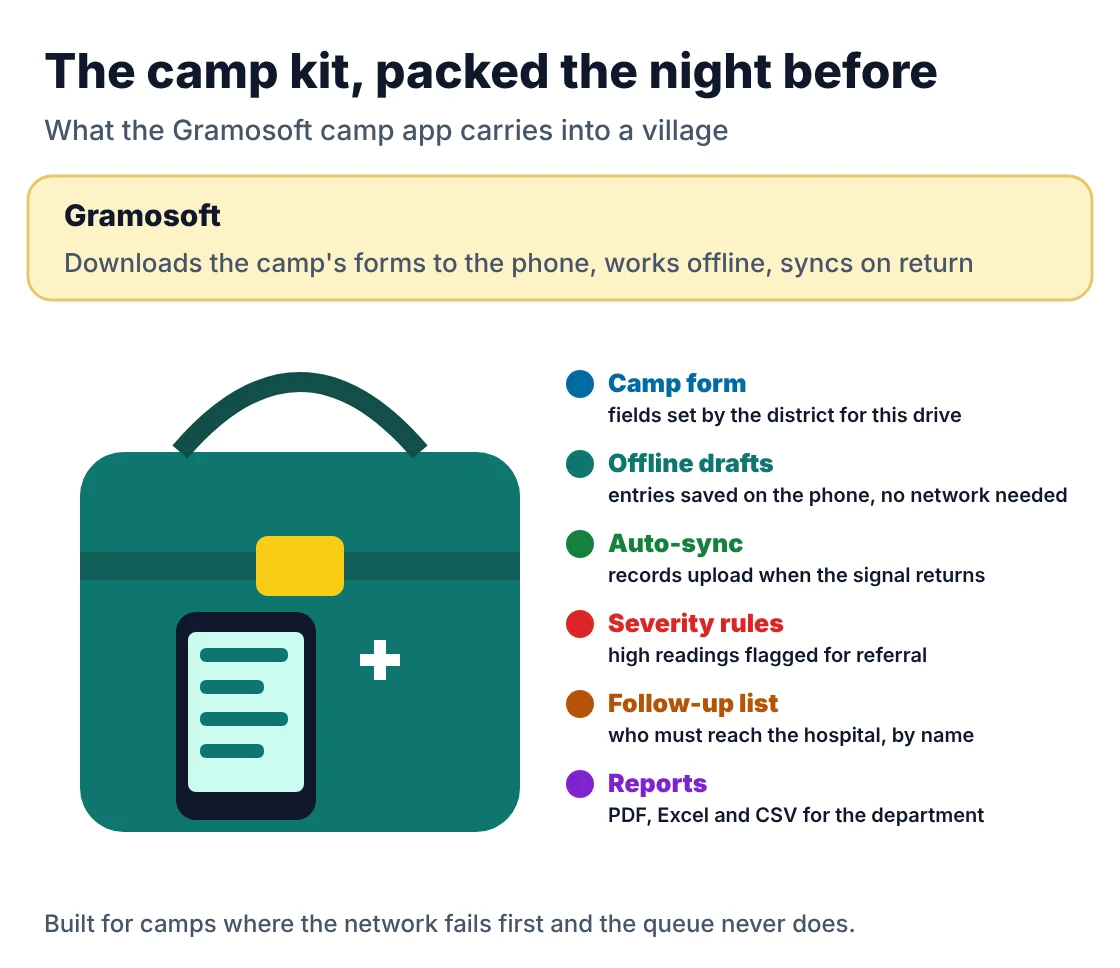
Gramosoft is a Chennai software company, incorporated in 2022, whose GramoCare suite includes a health camp management product. It was designed for camps where the network fails and the queue keeps growing: forms are set per drive, data is saved on the phone, and records sync and roll up when the team is back in range.
- Organisation, project and camp levels: a department can set up a programme as a project and each camp under it, so totals roll up without spreadsheets. See our health camp management software page.
- Configurable Camp Master forms: the district decides the fields for a drive, such as blood pressure, random blood sugar or oral examination, without new code.
- Offline capture with drafts and auto-sync: entries stay on the phone when there is no signal and upload when it returns.
- Rule-based severity bands: readings above set limits are flagged, and those people go onto a follow-up list by name.
- Expenses, roles and reports: camp costs, role permissions, and camp, patient and expense reports in PDF, Excel and CSV.
The product sits in GramoCare, our healthcare suite, whose clients include Chennai Liver Foundation and RPS Hospital.
Where we fall short. We do not yet offer QR wristbands with station-by-station queues, or medicine stock tracking at the camp. Reports export as Excel and CSV for your team to upload; we do not push data directly into government portals today.
"A camp is judged by the people who reach the hospital afterwards, not by the queue on the day. We built the follow-up list first and the registration screen second."
Rajesh Kannan M, Co-Founder & CTO, Gramosoft
Who runs government medical camps, and what they must report
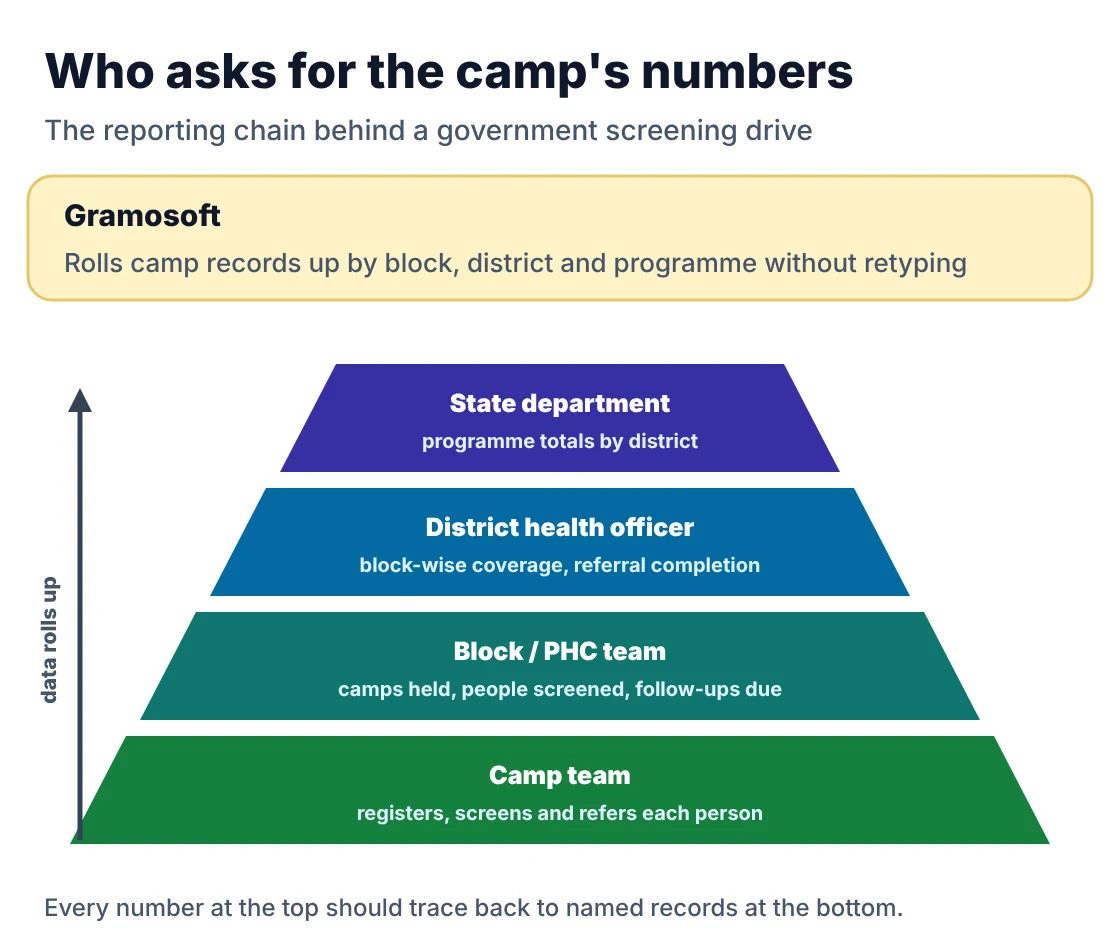
Government screening camps are run by primary health centres, community health centres, district hospitals and state programmes, usually against a target set by a national or state scheme. The camp team screens, but the numbers travel upwards: to the block, the district health officer and the state department.
- National NCD screening: under the National Programme for Prevention and Control of NCDs, people over 30 are screened for diabetes, hypertension and oral, breast and cervical cancer. The programme was renamed from NPCDCS to NP-NCD in May 2023.
- Daily reporting during drives: for the Ministry's special NCD screening drive from 20 February to 31 March 2025, screening, treatment and follow-up data was to be uploaded daily to the NP-NCD portal.
- Scale: NHM has set up district NCD clinics, day care centres and 6,238 NCD clinics at community health centres, each a referral point for camps.
State drives add their own targets. Tamil Nadu's Nalam Kaakkum Stalin camps reached 18.52 lakh people across 1,256 camps, detecting 1,50,708 new diabetes cases and 4,28,454 new hypertension cases, and referring more than 7.06 lakh people for further treatment.
How a district screening drive runs, step by step
A district drive is many camps run as one programme. The plan sets blocks, dates and targets; each camp gets a micro-plan; and every person passes through registration, screening and, when needed, referral. The drive only ends when follow-ups close and the department has a report it can check.
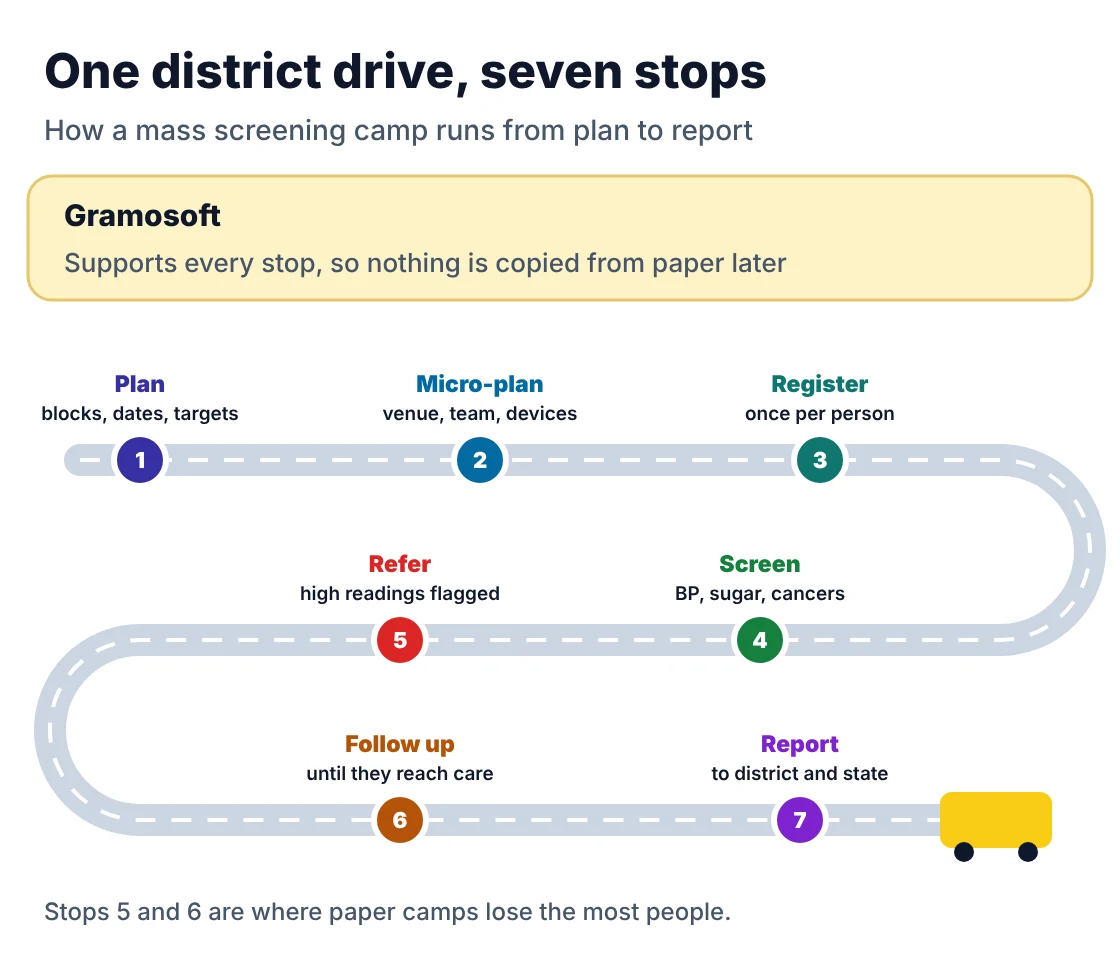
- Plan the drive: blocks, dates, target population and the screening form agreed with the programme officer.
- Micro-plan each camp: venue, team, devices charged, forms downloaded, and the referral facility for that area.
- Register once: each beneficiary gets one record, checked against earlier camps.
- Screen: blood pressure, blood sugar and the cancer checks the programme requires, recorded at the table.
- Refer: readings above set limits are flagged, and the person is told where to go and when.
- Follow up: health workers call or visit until the person reaches care or the case is closed.
- Report: totals by camp, block and district, exported for the department.
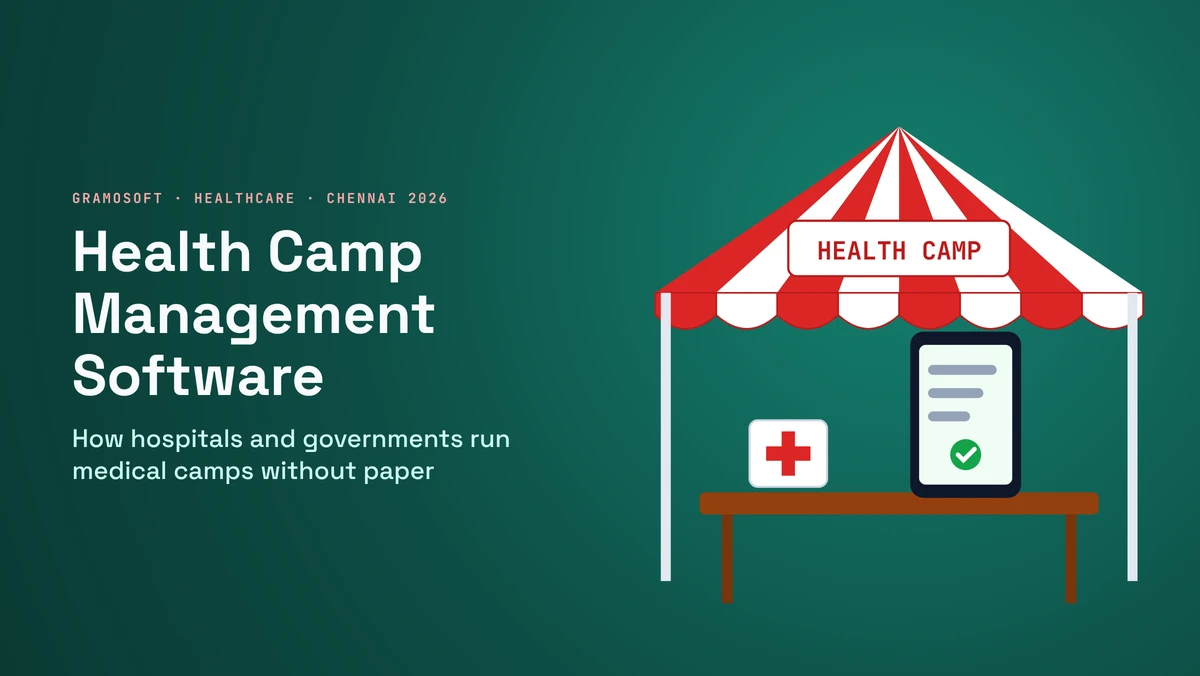
For a hospital or NGO camp the same steps apply with fewer levels; our Health Camp Management Software: How Hospitals and Governments Run Medical Camps Without Paper covers that general case.
Beneficiary registration: one person, one record
Registration decides whether the department's numbers can be trusted. If the same person is registered at two camps as two people, the screened count is inflated and their second reading looks like a new case. If two different people with the same name are merged, one of them disappears from follow-up.
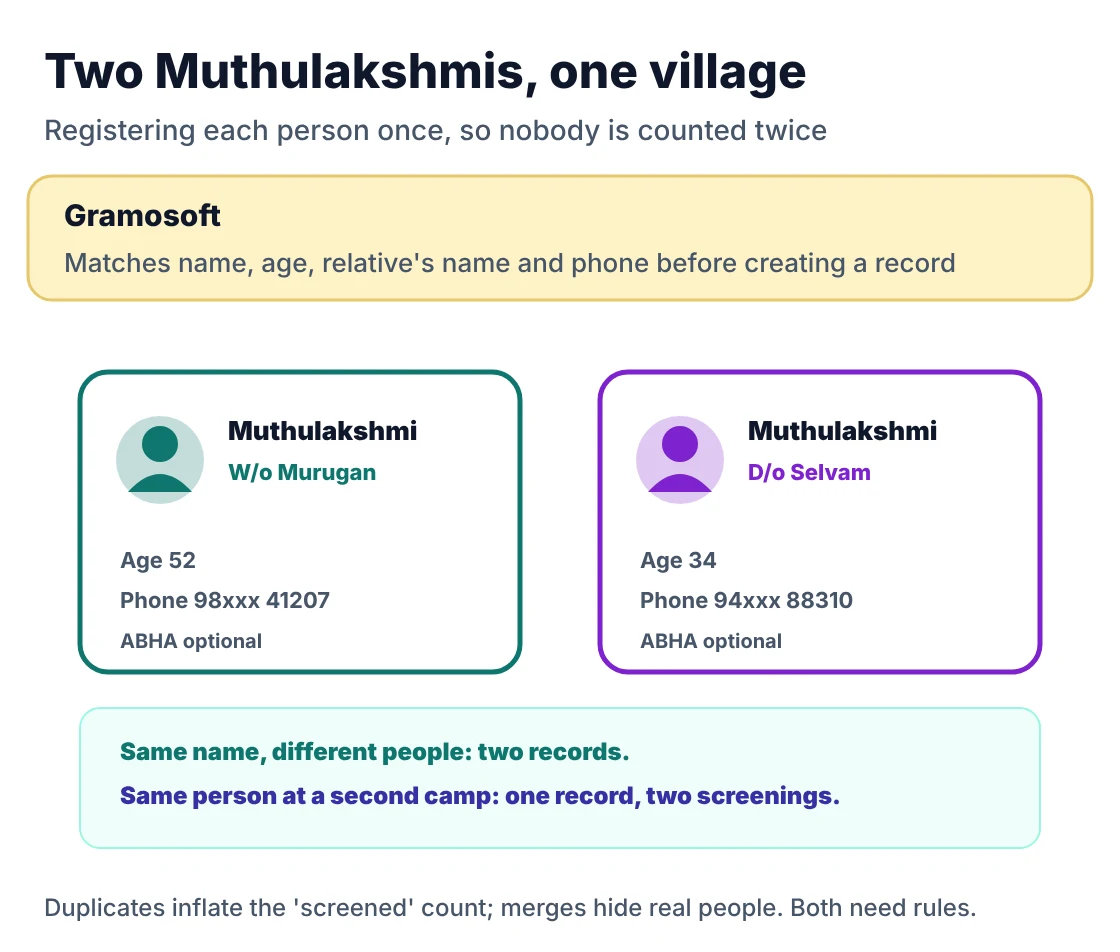
- Match before creating: name, age, phone and the father's or spouse's name, which rural registers use to tell namesakes apart, a point MedBrains also makes for district camps.
- Keep ABHA optional: link an ABHA where the person has one, but never turn anyone away without it.
- Capture consent at the desk: a short, spoken and recorded consent for screening and follow-up calls.
- Work offline: registration must keep going when the signal drops, then sync without creating duplicates.
Referral tracking: from camp to treatment
Paper registers record who was referred; they rarely show who arrived. That gap is where a screening drive loses most of its value, because a high reading that never reaches a doctor changes nothing. Referral tracking turns each referral into a named case with a status and an owner.
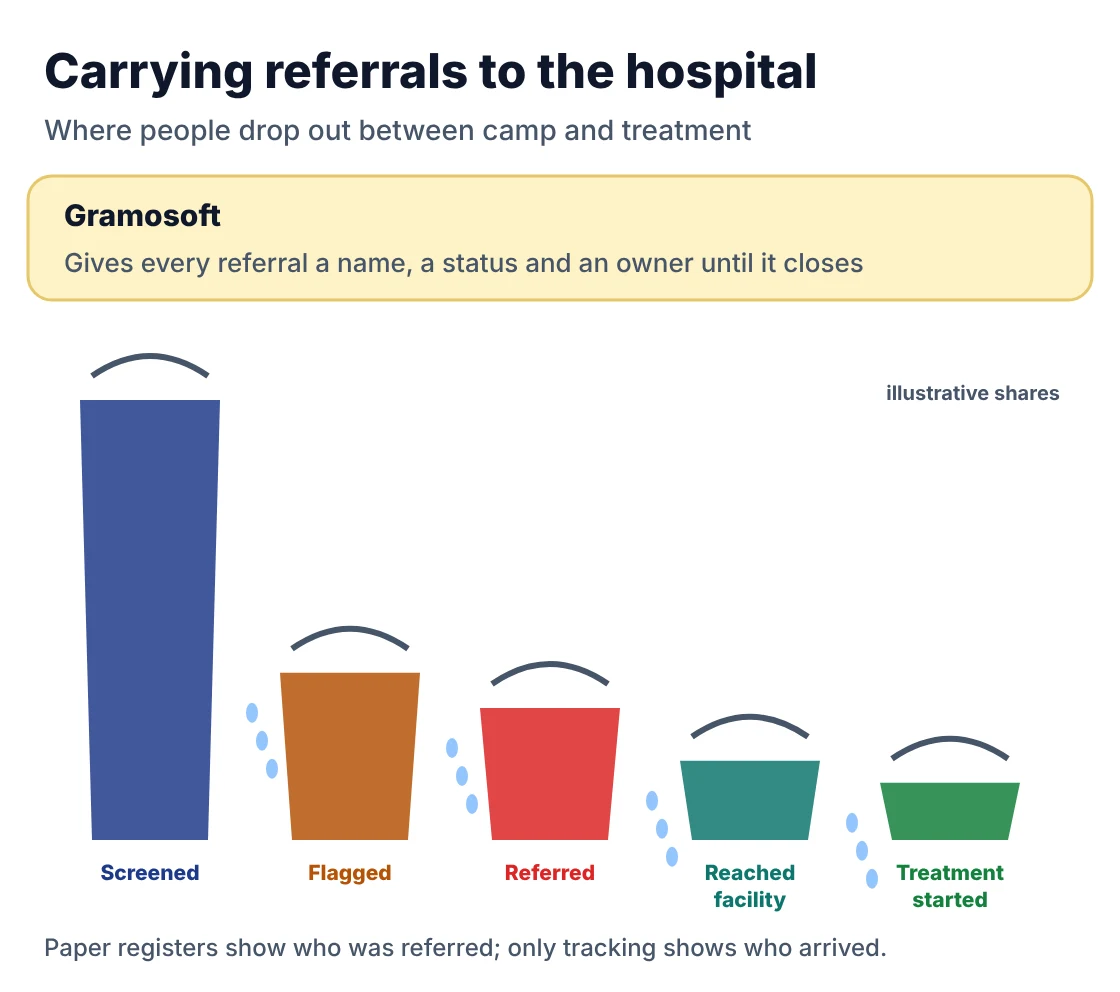
- Flag by rule: severity bands set by the programme mark who needs referral, so the decision does not depend on who is at the table.
- Name the destination: the PHC, CHC NCD clinic or district hospital, with a date.
- Give it an owner: the ASHA, ANM or health worker responsible for the follow-up call or visit.
- Track the status: referred, contacted, reached facility, treatment started or closed with a reason.
Tamil Nadu's Chief Minister made the same point about the state's camps: when diseases are detected, people should be referred for higher-level care and the cases monitored.
Reports for the health department
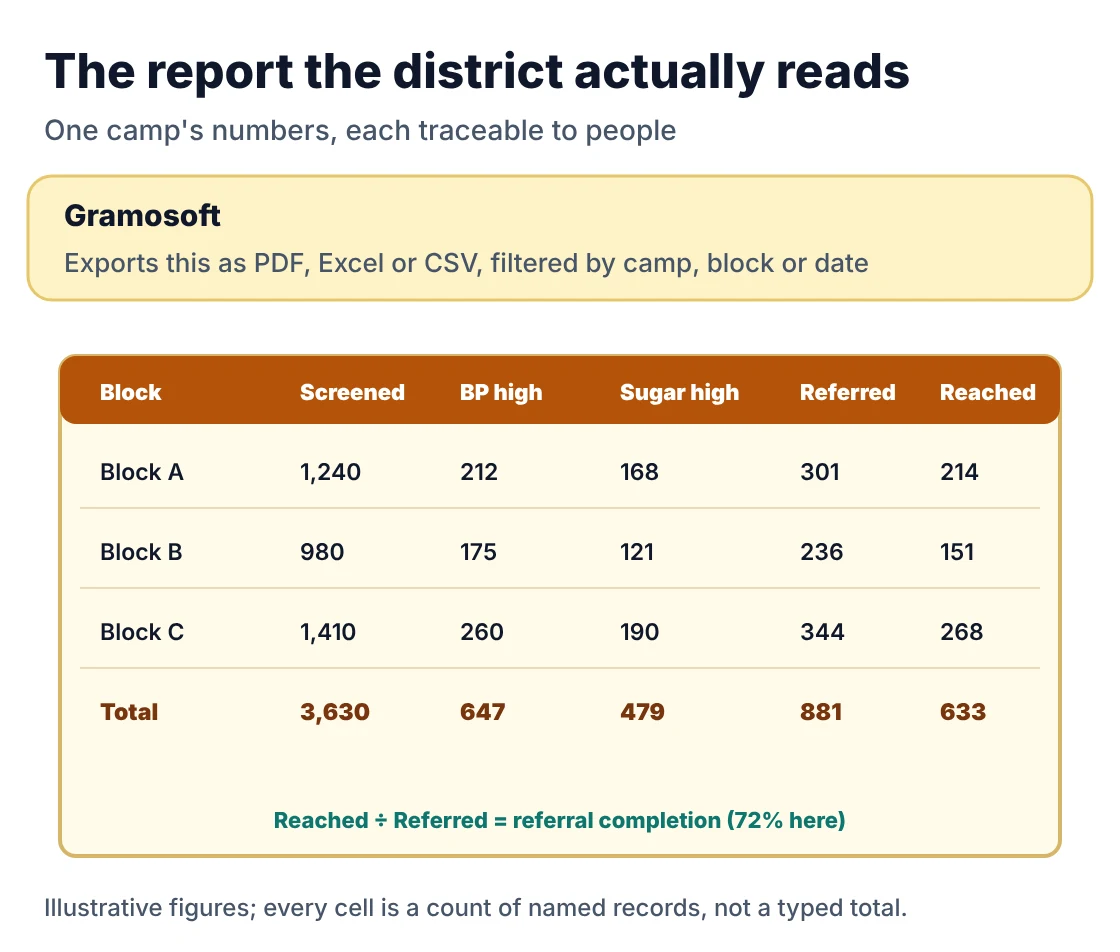
The district health officer does not want a stack of camp sheets; they want block-wise totals they can check and compare. Good camp software produces these from the records themselves, so every number can be traced to named people and nobody types totals from paper at night.
| Report | What it shows | Who reads it |
|---|---|---|
| Gramosoft camp and patient reports | Counts by camp, project and date range, with PDF, Excel and CSV export | Camp coordinator and programme team |
| Coverage by block | People screened against the target population | District health officer |
| Screening yield | Share of screened people flagged for each condition | District NCD cell |
| Referral completion | Referred people who reached a facility | District and state programme officers |
| Follow-up due list | Named people with open referrals, by health worker | Block and PHC teams |
| Camp expenses | Spend per camp and per person screened | Finance and programme managers |
Agree the report format with the programme officer before the drive starts, including the columns the state portal expects, so the export can be uploaded without retyping.
Data protection for government health camps
Camp data is personal health data about people who often have little choice but to attend. It must be collected with consent, seen only by those who need it, and kept where the department decides. India's DPDP Rules make these duties explicit, and core obligations apply from May 2027.
- DPDP timeline: the DPDP Rules were notified on 13 November 2025, with notice, consent, security and breach-reporting duties applying from 13 May 2027.
- Role-based access: a registration volunteer sees demographics, not lab values; a block officer sees their block, not the whole state.
- Hosting choice: state data centre, a government cloud or a private cloud in India, as the department requires.
- Audit trail: who created, changed or exported each record, and when.
What to look for in a medical camp management system for government use
Most camp software is built for hospital or corporate camps. A department needs more: many camps under one programme, offline work in villages, referral tracking, and reports that match the programme's formats. Use this checklist when you compare products or plan a custom build.
- Programme, district, block and camp levels, with totals that roll up.
- Forms the department can change per drive without new code.
- Offline registration and screening with safe sync and no duplicates.
- Duplicate checks across camps and drives.
- Rule-based referral flags and a named follow-up list.
- Exports in the programme's format, ready for portal upload.
- Consent, role access and an audit trail, hosted where the department chooses.
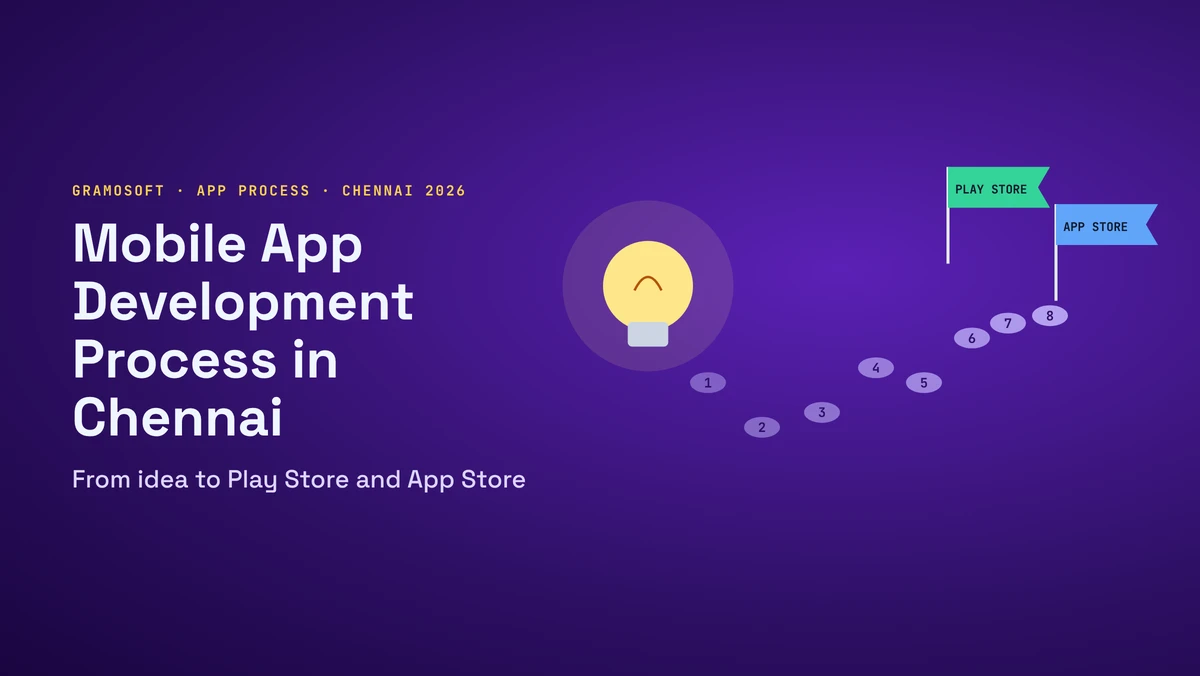
If no product fits the programme, a custom build on the same foundations is an option; see Custom Software Development in Chennai: Cost, Process & How to Pick a Partner and Mobile App Development Process in Chennai: From Idea to Play Store and App Store.
Frequently asked questions
Does Gramosoft build government medical camp software?
Yes. Gramosoft, a Chennai software company, builds health camp management software in its GramoCare suite with offline registration, configurable camp forms, rule-based severity flags, follow-up lists, expenses and PDF, Excel and CSV reports that roll up by organisation, project and camp.
What is a medical camp management system?
A system that records a camp from planning to report: who registered, what was screened, who was flagged and referred, follow-up status and camp costs, with totals for the organiser or department.
Can camp software work in villages without internet?
It should. Registration and screening are saved on the phone or tablet and synced when the network returns, without creating duplicate records.
How do health departments avoid counting the same person twice?
By matching each new registration against existing records on name, age, phone and father's or spouse's name before creating a new one, so a repeat visitor gets a second screening, not a second identity.
Is ABHA required at government screening camps?
It should not block care. Link an ABHA where the person has one, but register and screen everyone whether or not they have it.
Which conditions do NCD screening camps cover?
Under India's national NCD programme, people over 30 are screened for diabetes, hypertension and oral, breast and cervical cancer. State drives may add eye, dental or other checks.
Can camp data be uploaded to government portals?
Reports can be exported in Excel or CSV in the columns a portal expects, ready for upload. Direct portal integration depends on the portal offering an interface and on the department's approval.
Related guides
- Health Camp Management Software: How Hospitals and Governments Run Medical Camps Without Paper
- Mobile App Development Process in Chennai: From Idea to Play Store and App Store
- Custom Software Development in Chennai: Cost, Process & How to Pick a Partner
- Web Application Development Cost in Chennai (2026): What Drives the Price
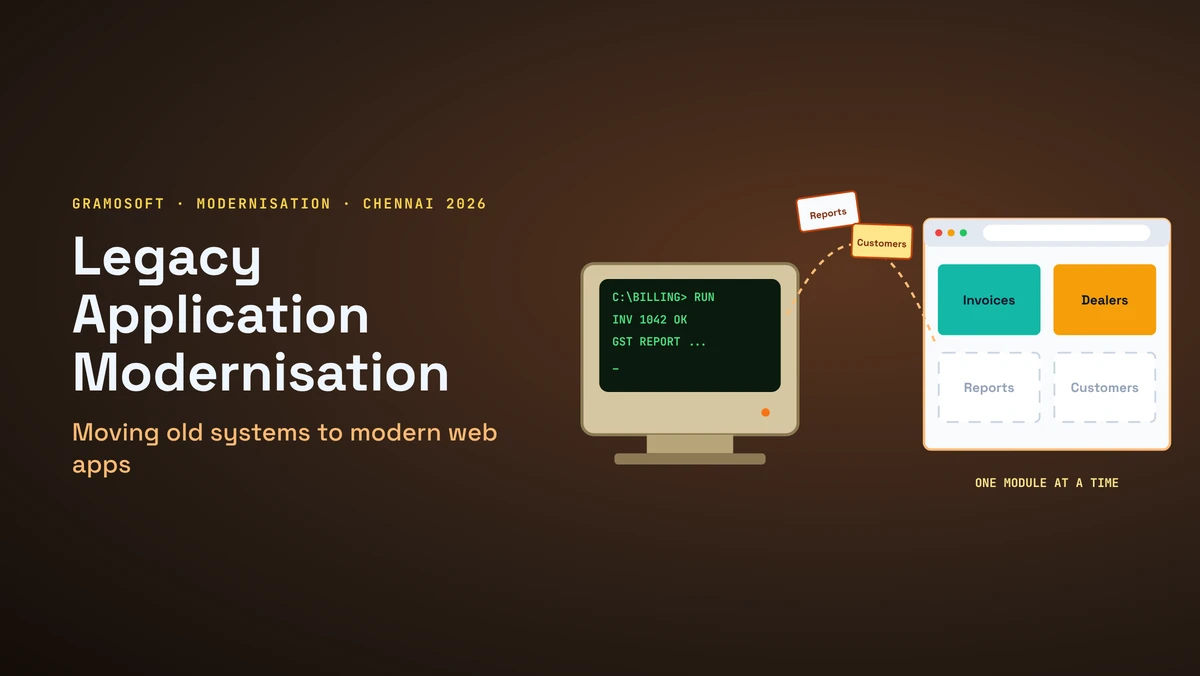
- Legacy Application Modernisation: Moving Old Systems to Modern Web Apps
- OCR vs IDP: What's the Difference and Which Does Your Business Need?
Rajesh Kannan M
Rajesh Kannan M is Co-Founder & CTO of Gramosoft in Chennai, where he leads the teams building custom AI, document AI, enterprise search and automation, including GsearchAI, GdoczAI and GcrawlAI, an open-source web scraping, crawling and Search API platform for developers and AI agents, alongside web and mobile applications.