By Rajesh Kannan, Co-Founder & CTO, Gramosoft · Last updated: · Figures and vendor details checked on November 11, 2026
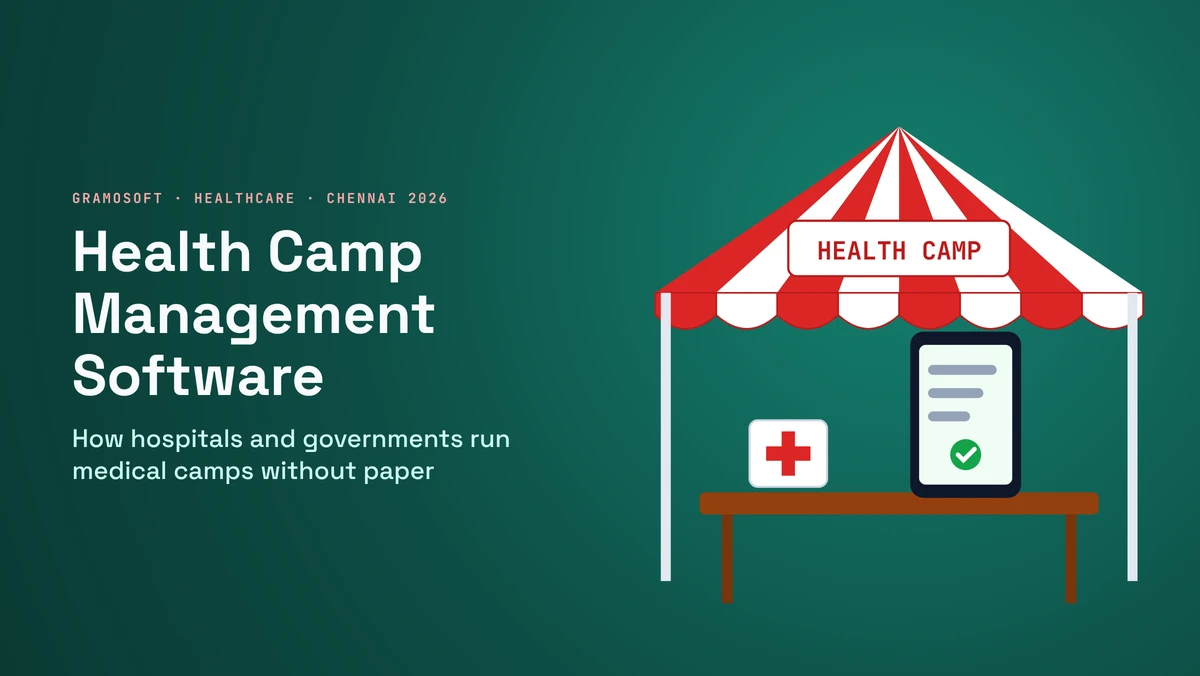
A health camp is one of the hardest places to keep good records. Hundreds of people arrive in a few hours, the venue is a school hall or a panchayat ground, the internet comes and goes, and the volunteers change from camp to camp. Paper registers survive the day. The data in them often doesn't survive the trip back to the office.
Health camp management software replaces the registers with one digital record per patient, captured on a phone even without signal and synced later. This guide starts with how Gramosoft's health camp software works, then covers the camp day, what hospitals and governments each need, offline capture, follow-up, patient data rules, and how to compare the products on the market.
TL;DR
- Gramosoft's health camp management software runs camps for NGOs, CSR teams and hospitals: offline registration on mobile, your own camp forms, follow-ups, expenses and reports.
- Paper fails after the camp, not during it: records go missing, duplicates creep in and referred patients can't be traced.
- Offline-first is not optional: the app must save every record on the phone and sync when signal returns.
- Follow-up is the real goal: Tamil Nadu's 1,256 Nalam Kaakkum Stalin camps referred over 7 lakh people for further treatment.
- Patient data is sensitive: capture consent at registration and limit who sees what.
What is health camp management software? It is software that lets NGOs, hospitals and government health teams set up a camp, register patients on mobile even without internet, record vitals and screening results, track follow-ups and expenses, and produce reports from one place instead of paper registers. Gramosoft builds health camp management software with offline capture and configurable camp forms.
Swipe the table sideways on mobile →
| Product | Built for | Offline capture | Stand-out |
|---|---|---|---|
| Gramosoft | NGOs, CSR teams, hospital outreach | Yes, with drafts and auto-sync | Organisation → Project → Camp hierarchy, own forms, expenses |
| Vaidhya | Hospitals, NGOs, government programmes | Yes, says the vendor | QR or barcode ID scanned at each station |
| CheckupMate | Clinics running corporate checkups | Not yet, per its FAQ | Doctor sign-off, client reports and GST billing |
| Healium (Triazine) | Custom build for one camp network | Yes, encrypted on device | Diagnostics, inventory and Aadhaar-based IDs |
| Racer Tracker (SumCircle) | Custom build for camp operations | Not stated | Staff sourcing, KYC, live location, client approvals |
How Gramosoft's health camp management software works
Gramosoft's health camp management software, part of our GramoCare healthcare suite, is built for NGOs, CSR teams and hospital outreach programmes in Chennai and beyond. Volunteers register patients on a mobile app that works without internet, using forms the organisation designs itself, and every record syncs to a web portal for reports, expenses and follow-up.
- Structure: a super admin manages organisations, users and roles, and every camp sits under Organisation → Project → Camp, so a funded programme and its camps stay separate in every report.
- Your forms: Camp Master forms with dynamic fields: you choose which fields appear, which are mandatory, their limits and the notes volunteers see. Forms can be copied to another organisation.
- Offline capture: the mobile app saves records and drafts on the device and syncs automatically when connectivity returns.
- Clinical rules: field rules turn readings into severity bands you configure, such as Normal, Monitor, High and Critical.
- After the camp: coordinators see only their camps; the follow-up module tracks next-visit dates; expenses report cost per camp; reports export to PDF, Excel or CSV.
See the full feature list on our health camp management software page, and the rest of the suite on GramoCare.
Where we fall short: we don't yet issue a QR code or wristband per patient for station-to-station scanning, which Vaidhya offers, so busy multi-station camps rely on a search at each desk. We don't track medicine or equipment stock, which Healium's custom build does. And we don't publish a per-checkup price the way CheckupMate does; we quote per programme.
"The camp day is the easy part. The test of the software is whether, three months later, someone can find every patient who was told to see a specialist and check that they did."
Rajesh Kannan, Co-Founder & CTO at Gramosoft
Why paper registers fail after the camp
Paper works on the day. Volunteers fill forms quickly and patients get seen. The trouble starts afterwards: sheets go missing between the venue and the office, the same person appears twice with different spellings, someone re-types everything into a spreadsheet, and patients who needed follow-up can't be found again because nobody can search a box of forms.
Scale makes it worse. Tamil Nadu's Nalam Kaakkum Stalin programme ran 1,256 special medical camps across every district between August 2025 and February 2026, screening 18.52 lakh people and referring more than 7.06 lakh for further treatment, according to the state health minister (DT Next). The Chief Minister has asked officials to follow up on those referrals (DT Next). At that volume, follow-up on paper is close to impossible.
A camp day without paper, station by station
A digital camp follows the same stations as a paper one; only the record changes. One record is created at registration and travels with the patient through vitals, screening and the doctor, then syncs to the portal. Setting up the camp beforehand and following up afterwards are where the software saves most of the time.
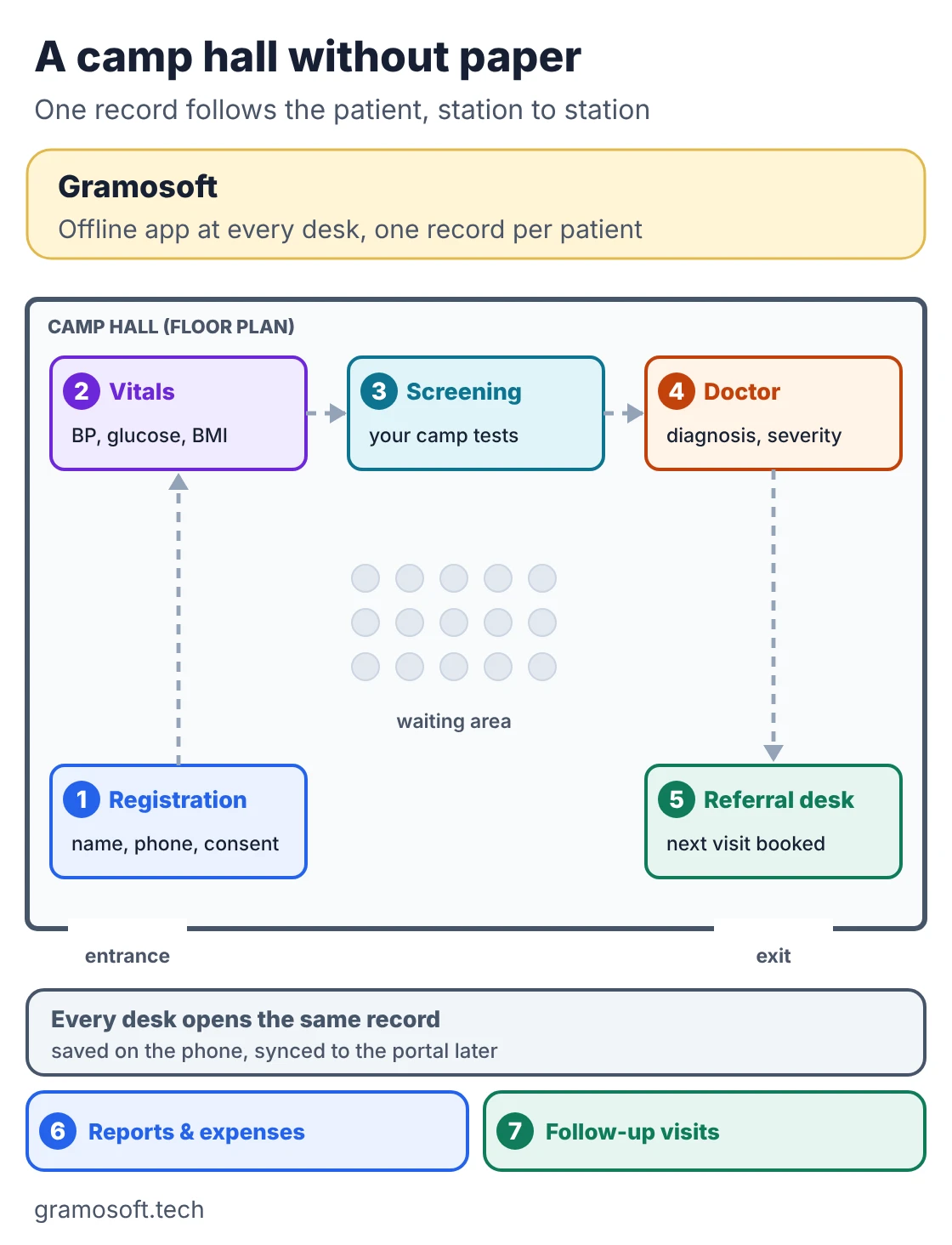
- Before the camp: set up the camp under its project, choose the form, assign coordinators and volunteers.
- Registration: name, age, phone, address and consent, on a phone, even with no signal.
- Vitals and screening: blood pressure, glucose, BMI and any custom tests, recorded against the same patient.
- Doctor consultation: diagnosis, severity band and any referral.
- Sync: records upload to the portal when the device is back online.
- Reports and expenses: camp and patient reports, cost per camp.
- Follow-up: next-visit dates and referral tracking for patients who need continued care.
What hospitals need and what governments need
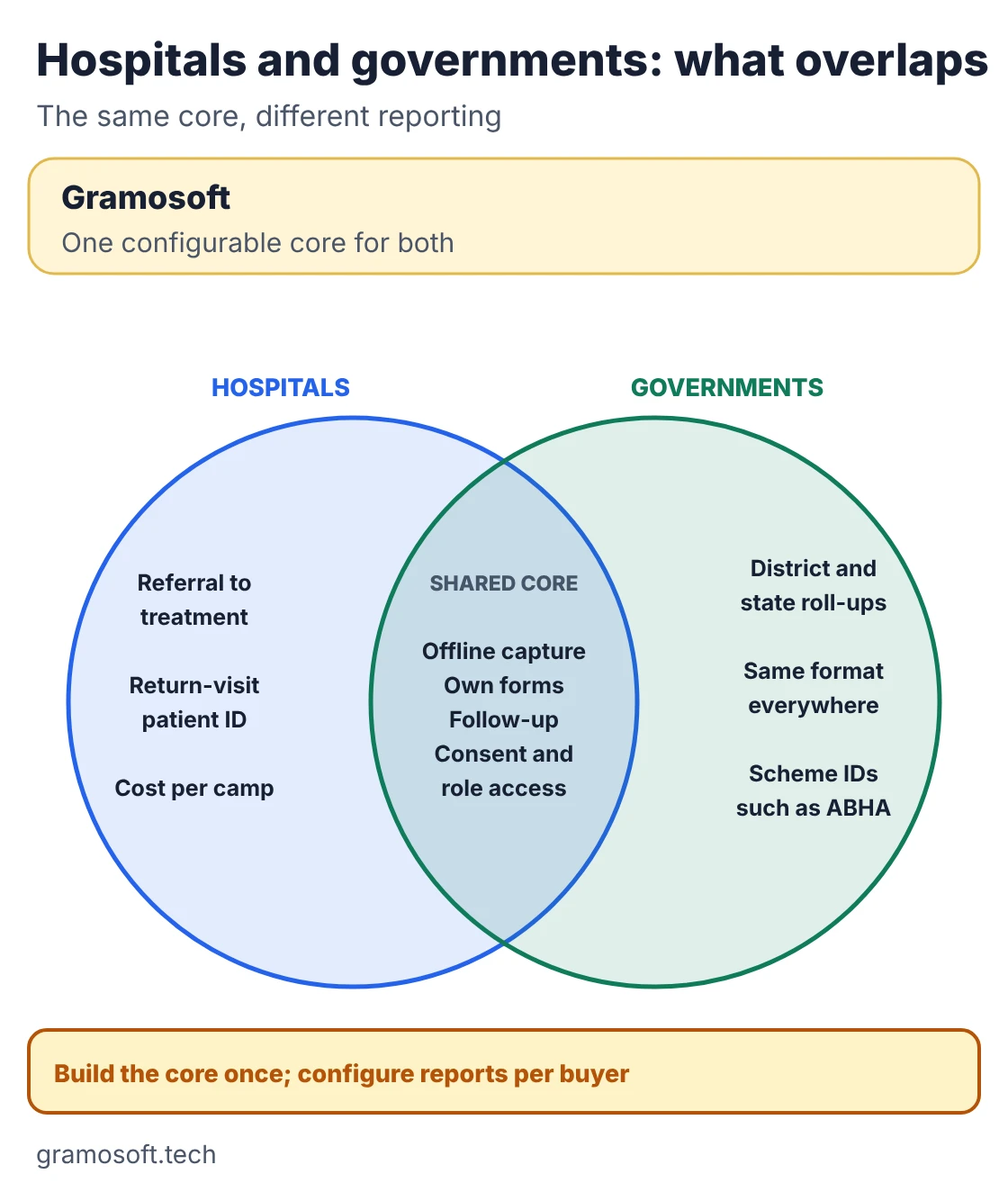
Hospitals and government health departments both run camps, but they measure success differently. A hospital wants patients who come back for treatment and records it can reuse. A government programme wants consistent reports across districts it can defend in a review. The core features overlap; the reporting and access rules differ.
Swipe the table sideways on mobile →
| Need | Hospitals and diagnostic centres | Government health programmes |
|---|---|---|
| Main goal | Convert screening into treatment at the hospital | Reach and report coverage across blocks and districts |
| Camp structure | Outreach, corporate and pre-employment camps | Campaigns with many camps running the same week |
| Reports | Referrals, conversions, cost per camp | Same format in every district, rolled up to state level |
| Access | Camp staff, doctors, the outreach team | Block, district and state officers, each seeing their own area |
| Identity | Hospital patient ID for return visits | Often linked to scheme IDs such as ABHA |
Offline first: how records survive a camp with no signal
Camp venues often have weak or no mobile data, and a system that needs the internet to save a record will stop the queue. Offline-first means every record is saved on the phone the moment it is entered, drafts can be finished later, and the app syncs in the background when signal returns, without anyone pressing upload.
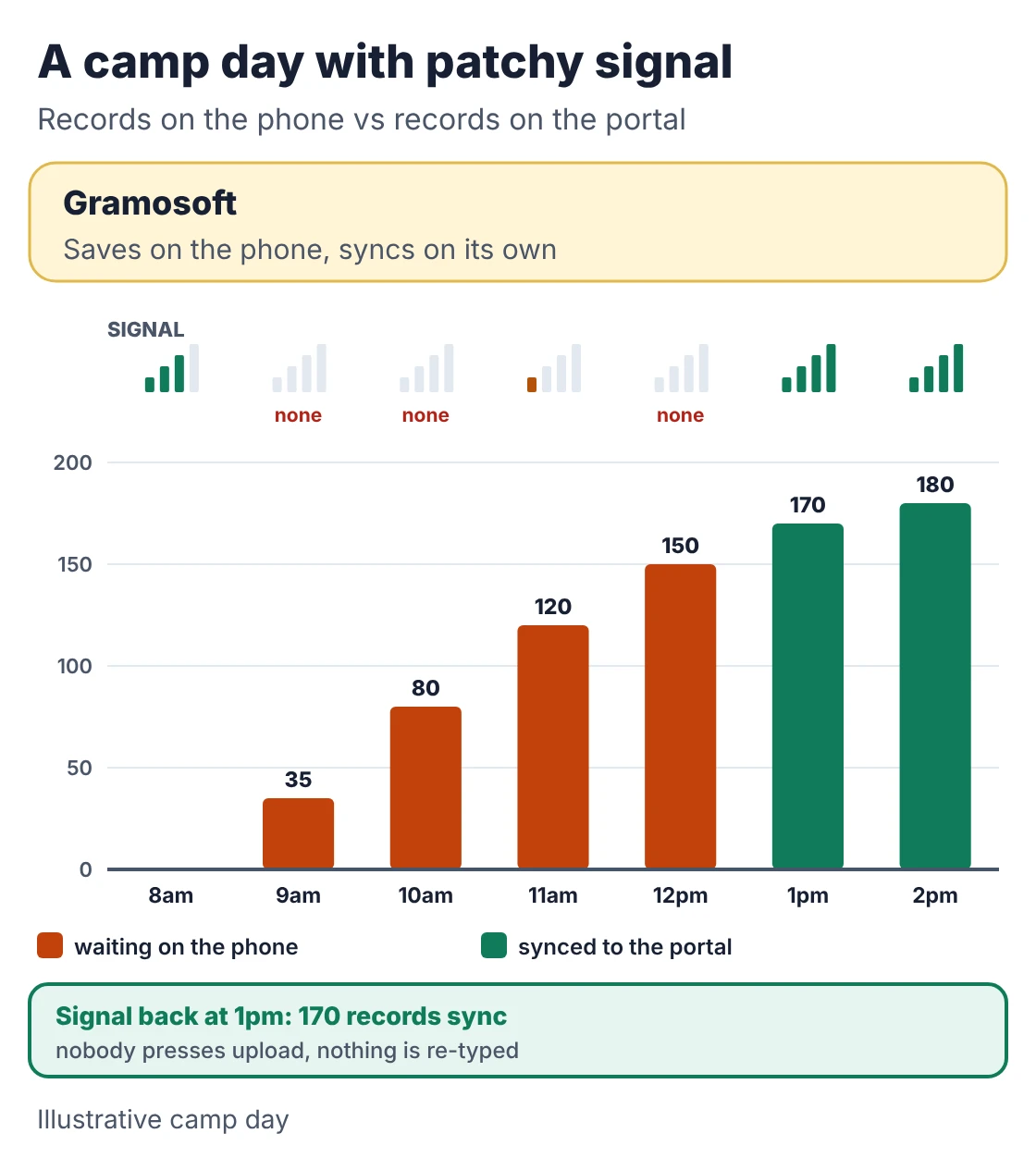
- Save locally, always: the device is the first copy, so a dropped connection never loses a record.
- Drafts: a half-finished record is saved and reopened, which matters when a patient walks off mid-registration.
- Sync without action: uploads happen automatically; coordinators can see what is still waiting.
- Protect the phone: camp devices get lost. Records stored on them should be protected, and access should end when a volunteer leaves.
Not every product does this. CheckupMate's own FAQ says a camp needs a connection for now, so check offline behaviour in a demo with the phone in flight mode. If you are building your own app, our comparison of Flutter, React Native and native covers the options.
Follow-up: where a camp actually makes a difference
Screening only helps if the people who need care get it. Every patient flagged at a camp should leave with a next step, and the software should show, weeks later, who completed it and who didn't. That list of patients still waiting is what turns a camp from an event into a health programme.
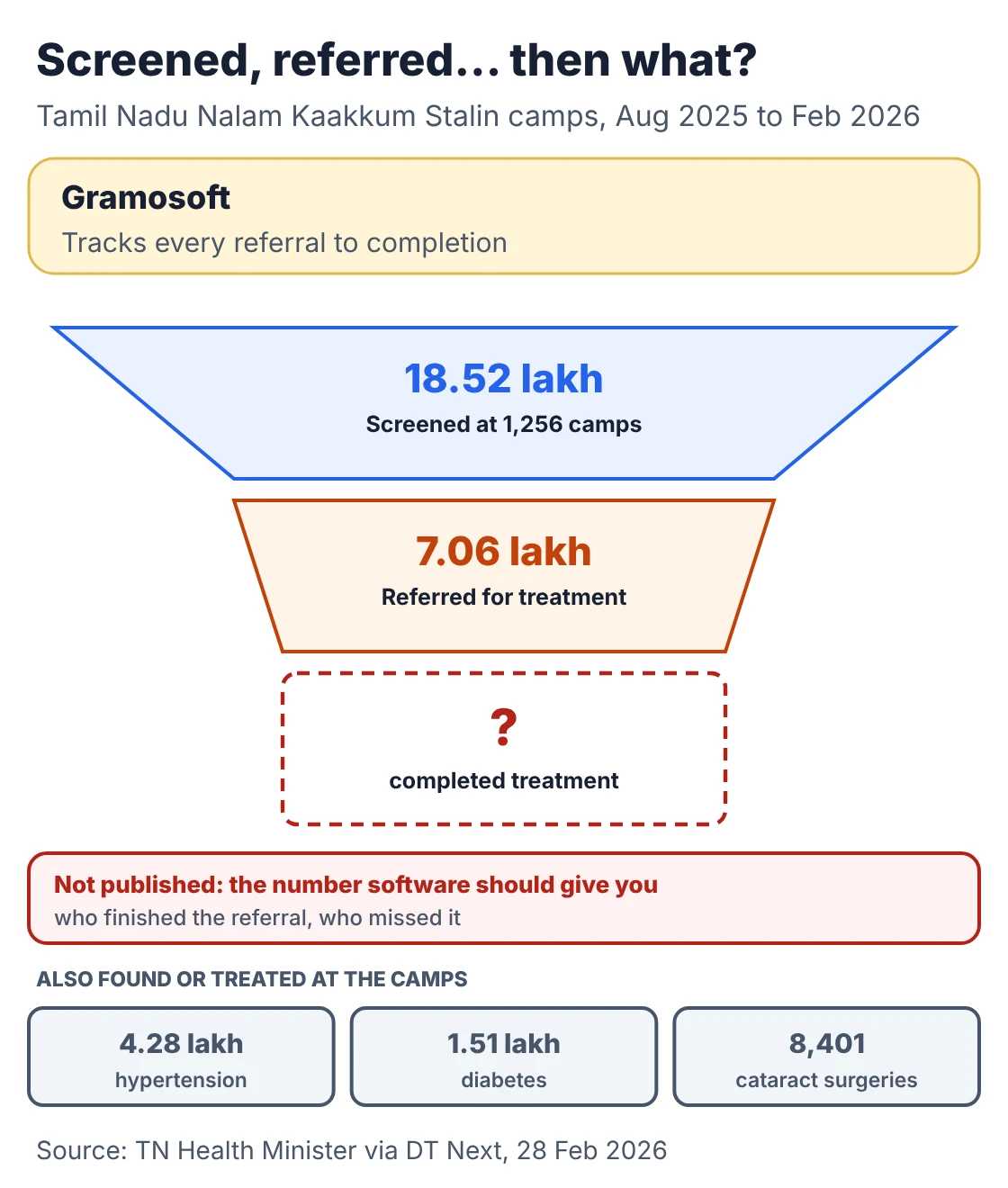
- Record the referral at the camp: where to, why and by when, against the patient's record.
- Use the phone number: a reminder call or message a few days before the date.
- Track completion: mark the visit done, missed or rescheduled, and report the open list per camp.
- Bring them back: previous camp records let the next camp in the same village start from history, not from zero.
Patient data, consent and ABHA
Camp records hold names, phone numbers and health readings, which makes them some of the most sensitive data an organisation collects. Ask for consent at registration, show each role only what it needs, keep an audit trail of who changed what, and decide upfront how long records are kept and who can export them.
- DPDP Rules: India's Digital Personal Data Protection Rules were notified on 13 November 2025, with core duties such as notice, consent and security safeguards applying from May 2027 (AZB & Partners). Build to them now.
- Role-based access: volunteers enter data; coordinators see their camps; administrators see programmes.
- ABHA: 96.43 crore ABHA health IDs had been created by 12 August 2026 (PIB), so many patients already have one. Government programmes may want camp records linked to it; agree this before the build, because it changes the registration flow.
For the controls themselves, see our data protection services.
How to compare health camp software
The products on the market solve different parts of the problem, so compare them against your own camp, not a feature list. A clinic billing companies for checkups needs something different from an NGO running village screenings. Run a test camp, switch the phone to flight mode, and ask to see the follow-up report.
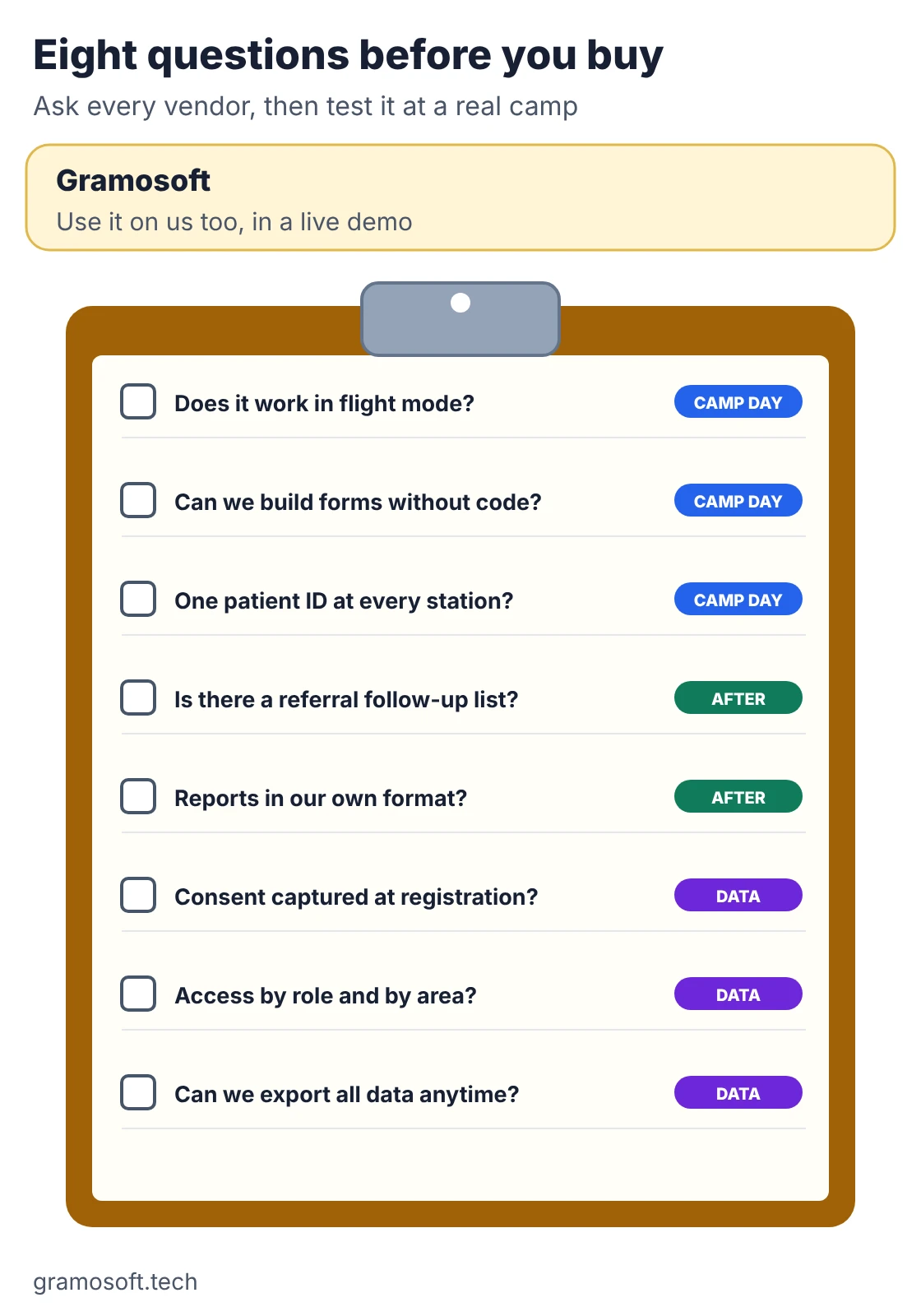
- Vaidhya describes a patient ID printed as a QR code or barcode that each station scans, plus offline sync and multilingual registration.
- CheckupMate targets clinics running corporate camps, with doctor sign-off, client portals and GST bills. It publishes pricing of ₹9.80 per checkup in packs from 250, or ₹14,999 a year for 1,800 checkups, excluding 18% GST, and says camps need a connection for now.
- Triazine built Healium, a custom platform with offline capture, diagnostics and inventory, reporting more than 83 camps and 10,000 registered users.
- SumCircle built Racer Tracker, a custom platform focused on camp operations: staff sourcing, KYC, live location and client approvals.
Planning a custom build instead? Our guides to mobile app development cost in Chennai and web application development cost help you budget the app and portal.
Frequently asked questions
What is health camp management software?
It is software that digitises a health camp from setup to follow-up: patient registration, vitals and screening, doctor notes, expenses, reports and next-visit tracking. It replaces paper registers with one record per patient that teams can search after the camp.
Does Gramosoft offer health camp management software?
Can health camp software work without internet?
Good ones can. Offline-first apps save every record on the phone and sync automatically when signal returns. Not all products do this, so test it in a demo with the device in flight mode before you choose.
How do government health departments use camp software?
They use it to run many camps at once with the same forms, see coverage by block and district, roll results up to state level, and track referrals. Consistent formats matter more to them than to a single hospital.
How does camp software help with patient follow-up?
It records each referral and next-visit date against the patient at the camp, sends reminders by phone, and lists who has completed, missed or rescheduled their visit, so the team can chase the patients still waiting.
Is patient data from health camps protected under Indian law?
Yes. India's DPDP Rules were notified on 13 November 2025 with core duties applying from May 2027. Collect consent at registration, limit access by role and keep an audit trail.
How much does health camp management software cost?
It varies by model. CheckupMate publishes ₹9.80 per checkup in packs, excluding GST. Custom and programme-based products, including Gramosoft's, are usually quoted per programme based on camps, users and integrations.
Related guides
- Mobile App Development Cost in Chennai
- Flutter vs React Native vs Native: What Chennai Businesses Should Choose in 2026
- Web Application Development Cost in Chennai (2026): What Drives the Price
- How to Choose a Mobile App Development Company in Chennai: 12 Questions to Ask Before You Sign
- Best Speech-to-Text & Text-to-Speech Models for Indian Languages (Tamil, Hindi, Telugu)
- Best Open-Source OCR Models in 2026: Accuracy, Speed & Cost Compared