By Rajesh Kannan, Co-Founder & CTO, Gramosoft · Last updated: · Prices and law checked on November 9, 2026
Custom software makes sense when your business has outgrown spreadsheets, WhatsApp groups and three tools that don't talk to each other. The hard part is everything around the code: knowing what it should cost, what the process should look like, and which Chennai team to trust with it.
This guide covers all three. It starts with how Gramosoft runs a custom build, then shows the price ranges Chennai vendors publish and why the build quote is the wrong number to compare. After that come the process phase by phase, a scorecard for picking a partner, and what the contract must say so you actually own what you paid for.
TL;DR
- Gramosoft builds custom web and mobile applications, business systems, RPA and AI from Chennai, and puts the code, cloud accounts and documentation in the client's name.
- Cost: Chennai vendors publish ranges from about ₹3–5 lakh for a focused tool to ₹25 lakh or more for a multi-module system. Compare the three-year cost, not the build quote.
- Process: discovery, prototype, a phased build with regular demos, testing on real data, rollout and support. The most painful module should go live first.
- Partner: score every firm on the same weighted scorecard, and ask to see work like yours.
- Ownership: under India's Copyright Act, code passes to you only through a signed written assignment. Get one.
How much does custom software development cost in Chennai? Ranges published by Chennai vendors run from about ₹3–5 lakh for a focused internal tool to ₹25 lakh or more for a multi-module ERP or SaaS platform, plus support each month. Scope, integrations and data migration move the price most. Gramosoft quotes after discovery and puts both the build and running costs in writing.
Swipe the table sideways on mobile →
| Stage | What you should get | Typical length | Ask |
|---|---|---|---|
| Discovery | Process map, scope, phased plan, written estimate | 1–3 weeks | Who joins, and what do I receive? |
| Prototype | Clickable screens tested by real users | 1–3 weeks | Can my staff click through it? |
| Build | Working software every one to two weeks | Weeks to months, per phase | When is the first demo? |
| Testing | Acceptance tests on your own data | 1–3 weeks per phase | Who signs off, and against what? |
| Rollout | Data migration, training, parallel run | 1–4 weeks | What happens to old data? |
| Support | Fixes, updates, small changes | Ongoing | What does it cost and cover? |
How Gramosoft builds custom software in Chennai
Gramosoft builds custom web applications, mobile apps and business systems for Chennai companies, often with document AI, search or RPA attached. Every project starts by mapping how work actually flows, ships the module that removes the most manual effort first, and ends with code, cloud accounts and documentation in the client's name.
- What we build: web applications, mobile apps, software products and business systems such as GramoERP, GramoCare and help desk software.
- Stack: Java Spring Boot, Angular and other mainstream tools, so another team can maintain the code later.
- What we add when it helps: AI through GdoczAI, GsearchAI and GcrawlAI, RPA for older systems without APIs, and security reviews.
- Work you can look at: a dealer management system and dealership automation for Kia DMS and a Mercedes-Benz showroom.
Where we fall short: we don't implement SAP or build blockchain or game products, and we are not set up to place large numbers of engineers into your team. If a standard product already fits your process, we'll tell you to buy it.
"The best custom software project is a small one that works. Build the module that removes the most re-typing, let people use it for a month, then decide what comes next with real usage in front of you."
Rajesh Kannan, Co-Founder & CTO at Gramosoft
Build, buy or both
Buy a product when it fits your process without workarounds: accounting, payroll and email are solved problems. Build when your process is what sets you apart. Most Chennai businesses land in between: keep the product as the system of record and build a focused application around the one workflow it handles badly.
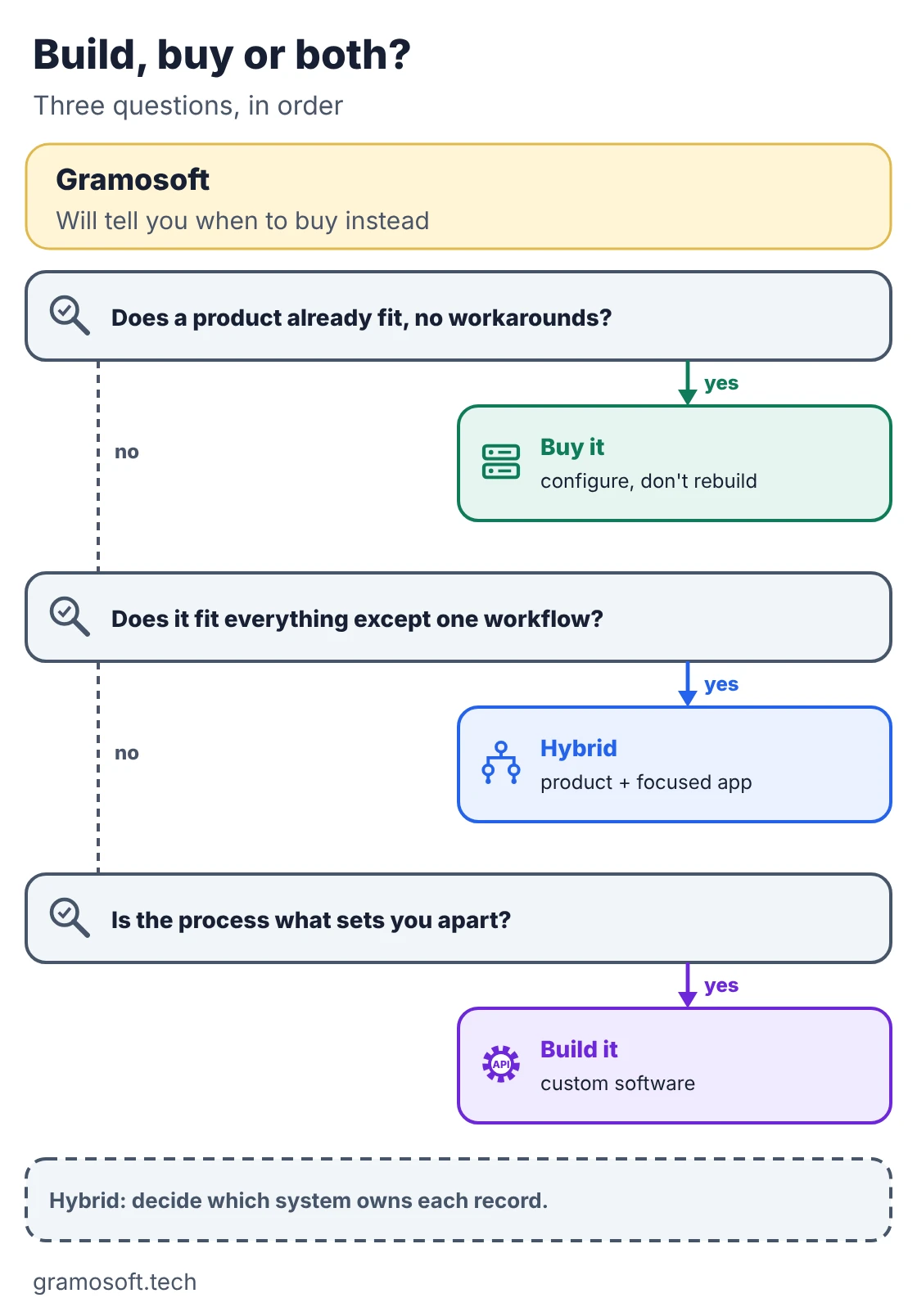
- Signs you should build: staff re-type data between tools, approvals run on WhatsApp, and nobody can see the whole picture without stitching spreadsheets together.
- Signs you should buy: the process is common, the product handles it as is, and your team would rather adapt than wait for a build.
- The hybrid question: which system owns each record (customers, stock, orders), and how does data stay in sync?
What custom software development costs in Chennai
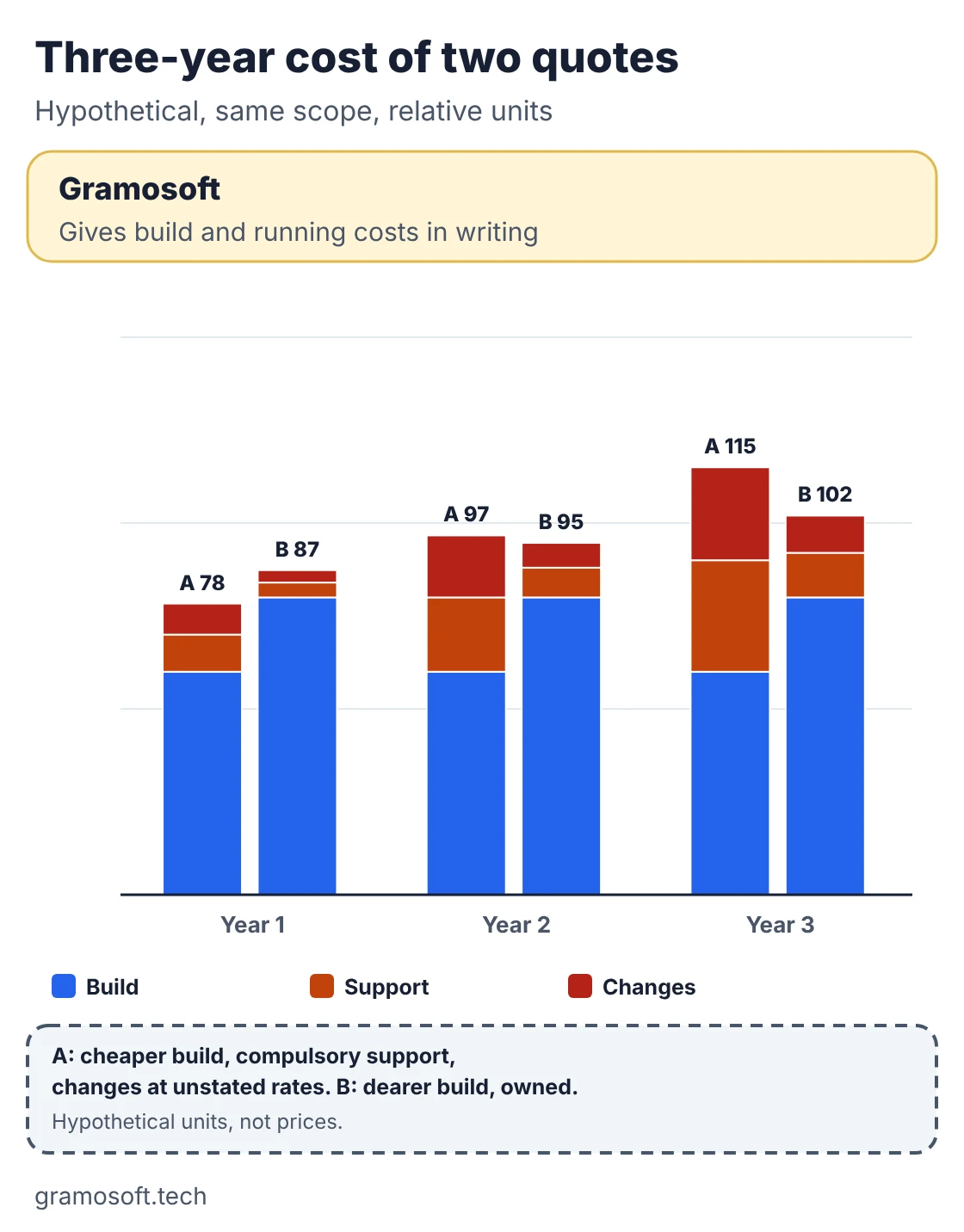
Chennai vendors that publish prices give ranges from about ₹3–5 lakh for a focused tool or MVP to ₹25 lakh or more for a multi-module system, with monthly support on top. Those are their own published figures, not market data, and the build quote is the wrong number to compare anyway. Compare the three-year total.
Swipe the table sideways on mobile →
| Vendor page (Chennai) | What it publishes |
|---|---|
| Razegreen | Most custom business systems from about ₹4 lakh for a focused tool to ₹25 lakh or more for a multi-module ERP or SaaS |
| Code Neptune | MVP ₹3–12 lakh; internal business software ₹5–20 lakh; support ₹15,000 to ₹1.5 lakh a month |
| NexaEx | Custom web application ₹4–15 lakh; ERP or CRM ₹15 lakh to ₹1 crore or more |
Ranges read on November 9, 2026. Gramosoft doesn't publish one range, because two projects with the same name can differ tenfold; we quote after discovery. Our guide to web application costs, linked below, breaks down the drivers.
- Scope: modules, user roles and branches add screens, rules and tests.
- Integrations: ERP, Tally, payment gateways and the e-invoicing portal each need design and testing.
- Data migration: years of spreadsheets are the line most often under-budgeted. Ask who cleans the data.
- Support and changes: compare a three-year total, including hosting and the changes you already know you'll want.
The custom software process, phase by phase
A sound build runs in six phases: discovery, a clickable prototype, a phased build with demos every one to two weeks, acceptance testing on your own data, rollout with migration and training, and support. The first module should be in daily use before the rest is finished, so real usage shapes what comes next.
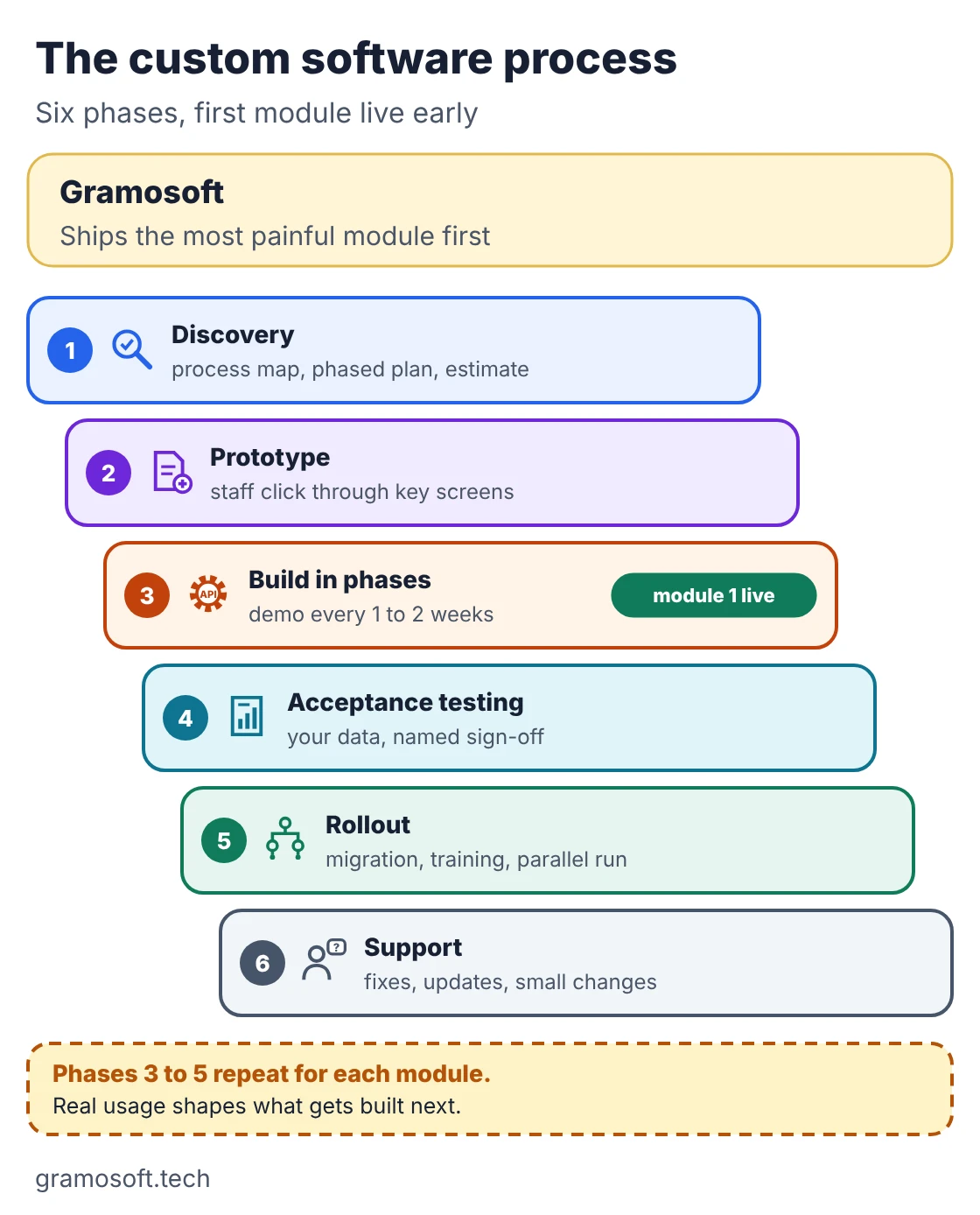
- Discovery: workshops with the people who will use the system, ending in a process map, a phased plan and a written estimate.
- Prototype: staff click through the key screens before code is written, while changes are still cheap.
- Build in phases: a demo every one to two weeks, automated tests and a staging copy your team can try.
- Acceptance testing: agreed tests on realistic data, signed off by a named person on your side.
- Rollout: data migration, training and, for critical processes, a short parallel run with the old way.
- Support: fixes, security updates and small changes under a written plan.
How to pick a custom software partner
Send every shortlisted firm the same one-page brief, then score their answers on one weighted scorecard instead of comparing sales calls. Relevant work you can actually see carries the most weight, followed by how well they understand your process. Price comes last, once scope and ownership are clear.
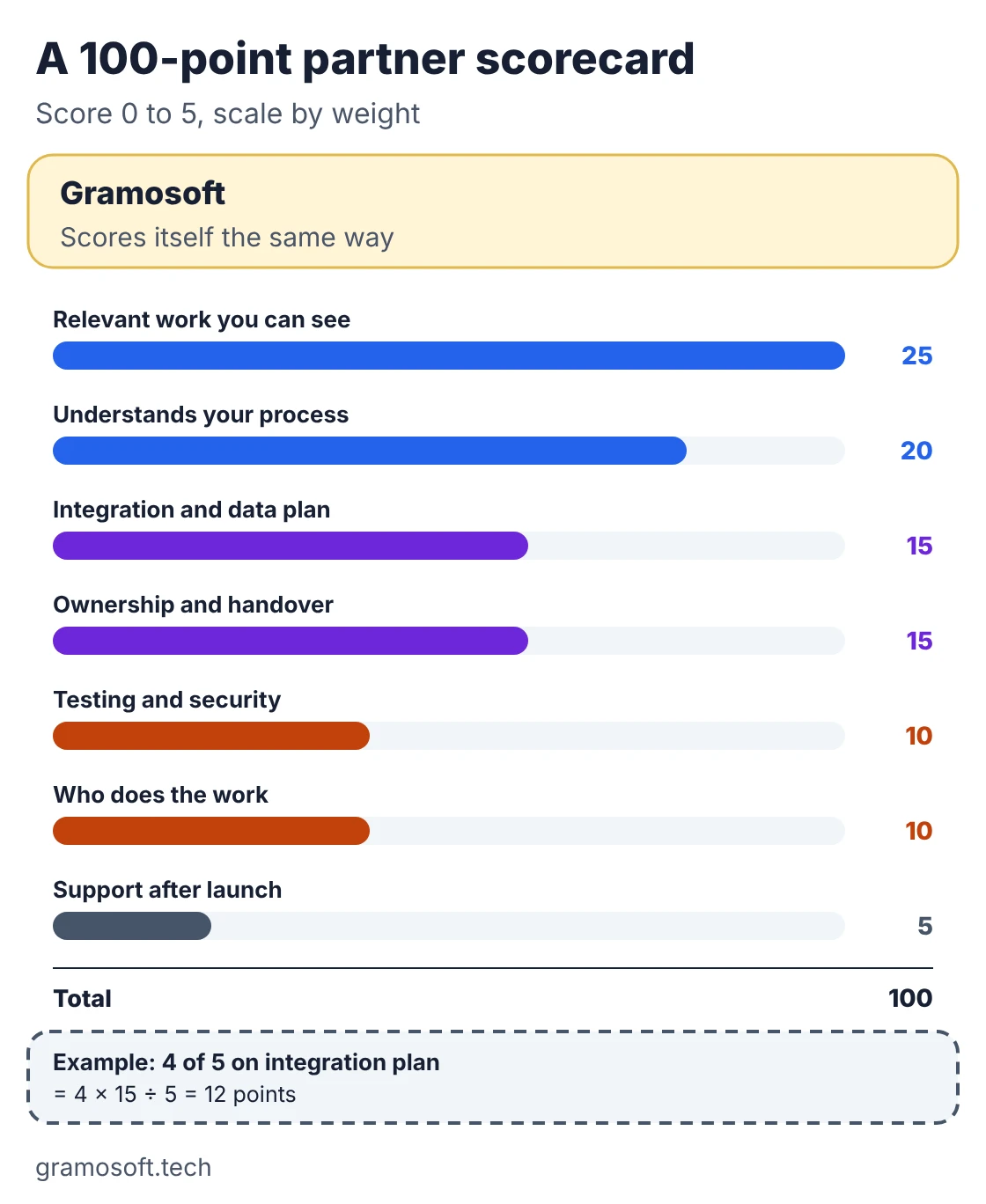
Score each line from 0 to 5, multiply by its weight and divide by 5. A firm scoring 4 of 5 on the integration plan earns 12 of 15 points. Write down the evidence behind each score, so the decision rests on what you saw, not on the best presentation.
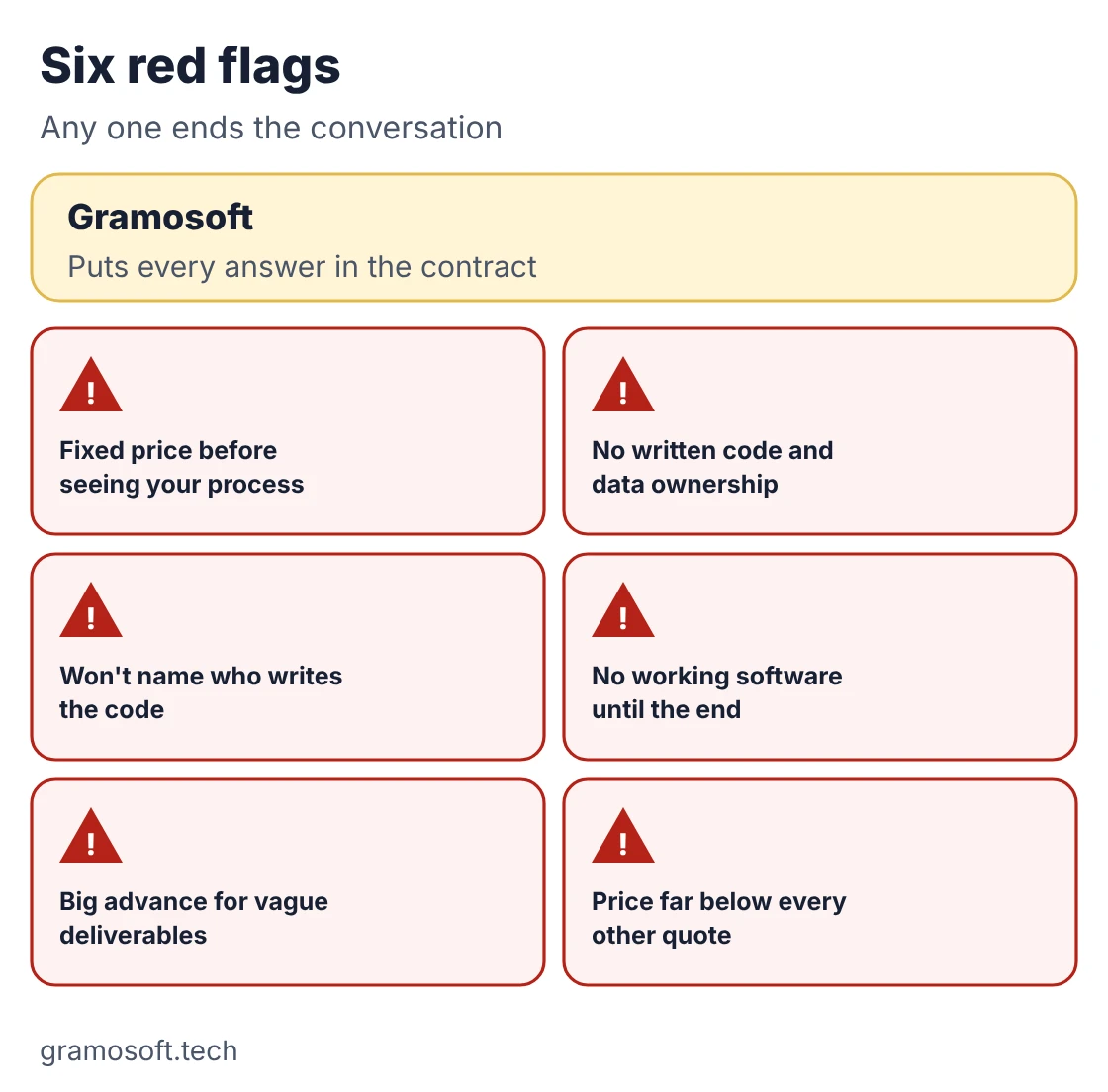
What the contract must say about ownership
Under section 17 of India's Copyright Act, 1957, the author of a work is its first owner, and the exceptions don't clearly cover software written by an outside firm. Section 19 says an assignment is valid only in writing, signed, naming the rights, duration and territory. Leave those out and defaults apply.
- Duration: if the assignment doesn't state a period, section 19(5) deems it to be five years. State "in perpetuity" or the term you want.
- Territory: if it doesn't state a territory, section 19(6) presumes India. State "worldwide" if you sell abroad.
- What's covered: source code, database design, documentation and design files, plus repository and cloud accounts in your company's name.
- Personal data: core obligations under the DPDP Act apply from May 2027, so put data handling in the contract now.
Sources: the Copyright Act, 1957 on India Code and AZB & Partners on the DPDP Rules. This is general information, not legal advice; have your lawyer review the wording.
Frequently asked questions
How much does custom software development cost in Chennai?
Chennai vendors publish ranges from about ₹3–5 lakh for a focused tool to ₹25 lakh or more for a multi-module system, plus monthly support. Scope, integrations and data migration decide where yours falls.
How long does custom software take to build?
A focused first module often goes live in two to four months, including discovery and testing. Larger systems arrive in phases, with the first module in use while the rest is built.
Does Gramosoft build custom software in Chennai?
Yes. Gramosoft builds custom web and mobile applications, business systems such as GramoERP, RPA bots and AI products, and hands code, accounts and documentation to the client.
Who owns software a vendor builds for me in India?
The author owns it first. It passes to you only through a written assignment signed by the vendor that names the rights, duration and territory, under sections 17 and 19 of the Copyright Act, 1957.
Should I choose fixed price or time and materials?
Fixed price suits a scope that discovery has pinned down. Time and materials suits a product that will keep changing. Many projects use a fixed-price first phase, then monthly billing.
Do I need a software company based in Chennai?
It helps when the system depends on a physical operation, such as a plant, stores or a clinic, because the team can watch the work and train staff in person. For a web portal, a remote team can work well.
Is custom software cheaper than SaaS subscriptions?
Upfront, no. Over three to five years it can be, once per-user fees, add-ons and the hours spent on workarounds are counted. Compare the totals, not the first year.
Related guides
- Web Application Development Cost in Chennai (2026): What Drives the Price
- Mobile App Development Cost in Chennai
- How to Choose a Mobile App Development Company in Chennai: 12 Questions to Ask Before You Sign
- Top 10 Mobile App Development Companies in Chennai (2026)
- Flutter vs React Native vs Native: What Chennai Businesses Should Choose in 2026
- Best AI Agent Frameworks in 2026: LangGraph vs CrewAI vs OpenAI Agents SDK vs Google ADK
- How to Run LLMs Locally with Ollama: A Setup Guide for Businesses
- 10 Best Claude Code Alternatives in 2026 (Free and Paid)