Updated 24 November 2026 · studies and Indian data-protection dates checked 24 November 2026
Most AI projects do not fail because the model is bad. They fail because nobody agreed what problem it solves, the data was not ready, or the pilot was never built to survive real users. This guide starts with how Gramosoft runs AI projects to avoid that, then covers ten reasons projects fail and the fix for each.
TL;DR
- Gramosoft runs every AI project in Chennai through written gates: a use case with a baseline and a stop rule, a data audit, a PoC with a pass mark agreed first, a pilot with real users, then production with monitoring and a named owner.
- The failure rate is high: RAND puts it at more than 80%, about twice that of IT projects without AI; S&P Global found 42% of companies abandoned most of their AI initiatives.
- The top causes are human: in RAND's interviews, 84% blamed leadership choices such as the wrong problem or the wrong metric, and data problems came second.
- Most fixes are cheap if done early: write the success number down, audit the data before building, plan production from the first day and name one owner.
- Indian projects have a deadline: the DPDP Rules' main duties on notice, consent and security apply from 13 May 2027.
Why do AI projects fail? Most fail for organisational reasons: the problem or success metric is unclear, the data is not ready, the pilot was built for a demo rather than production, nobody owns the model after launch, or users do not trust it. Gramosoft avoids these with written go/no-go gates before each stage of the build.
How Gramosoft keeps AI projects from failing
Gramosoft builds AI systems in Chennai that run inside real business workflows, and every project passes written gates. Each gate has a number agreed with you before work starts, and a project that misses its number stops or changes course instead of drifting. The gates cover the problem, the data, the pilot, production and ownership.
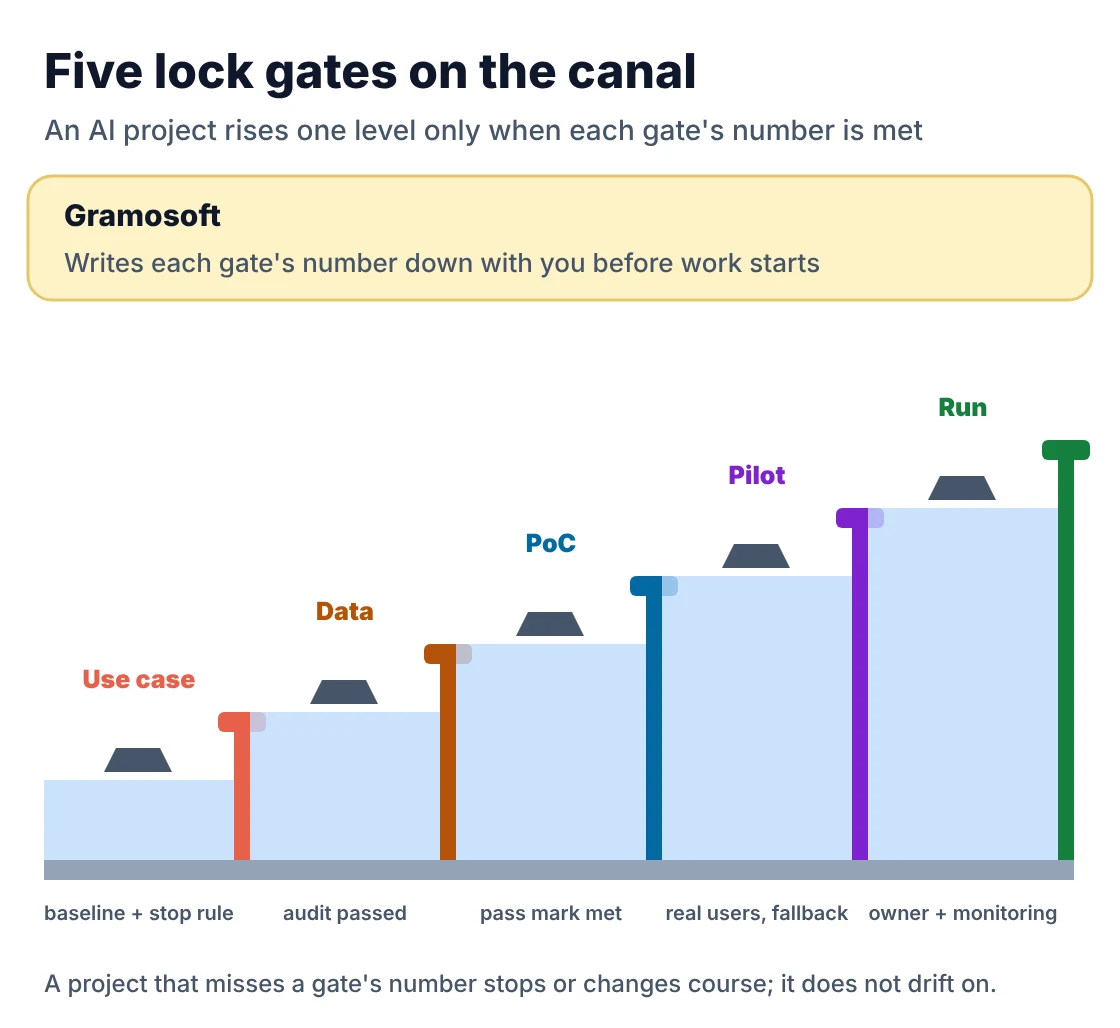
- Use case gate: one problem, today's baseline, the number that counts as success and a stop rule, written on one page.
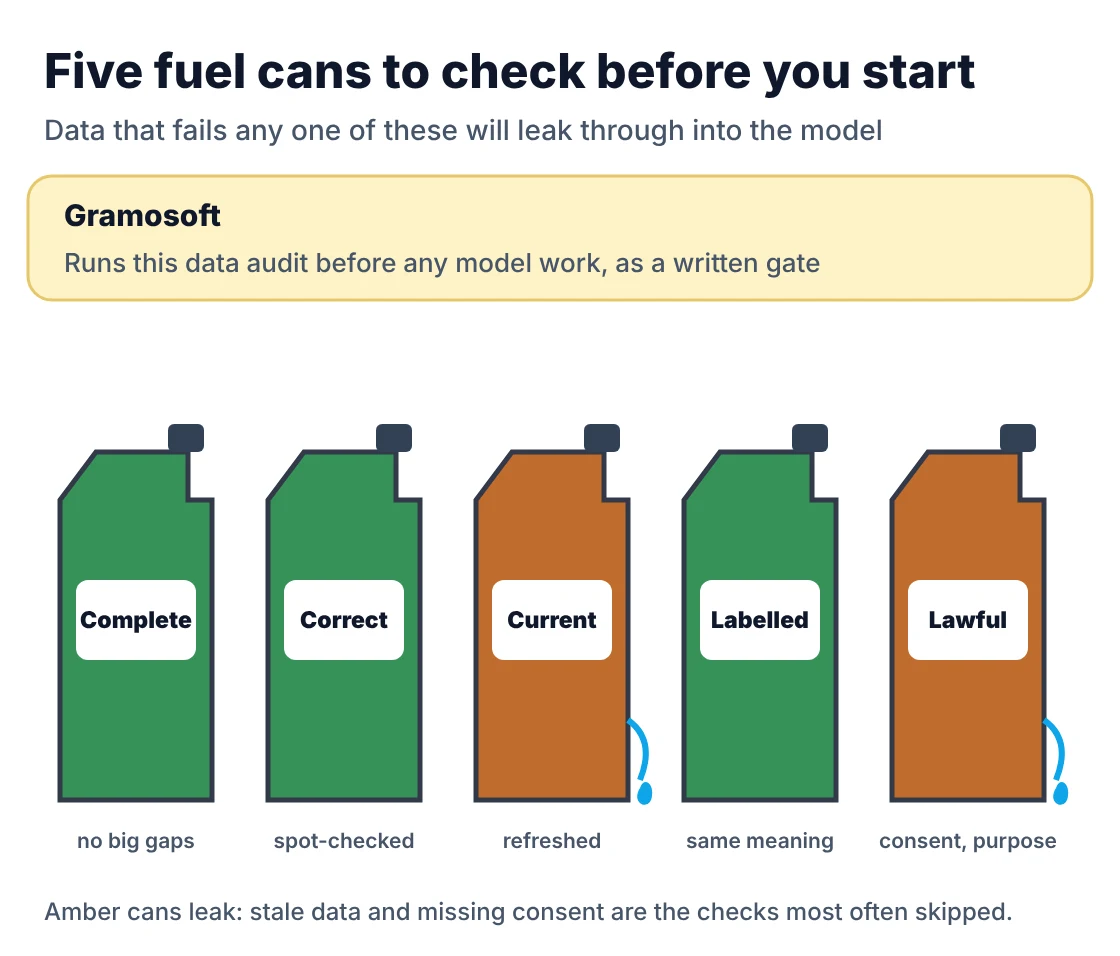
- Data gate: a data audit of availability, access, quality and labels before any model work.
- PoC gate: a pass mark on held-out examples, compared with the baseline, agreed before the build.
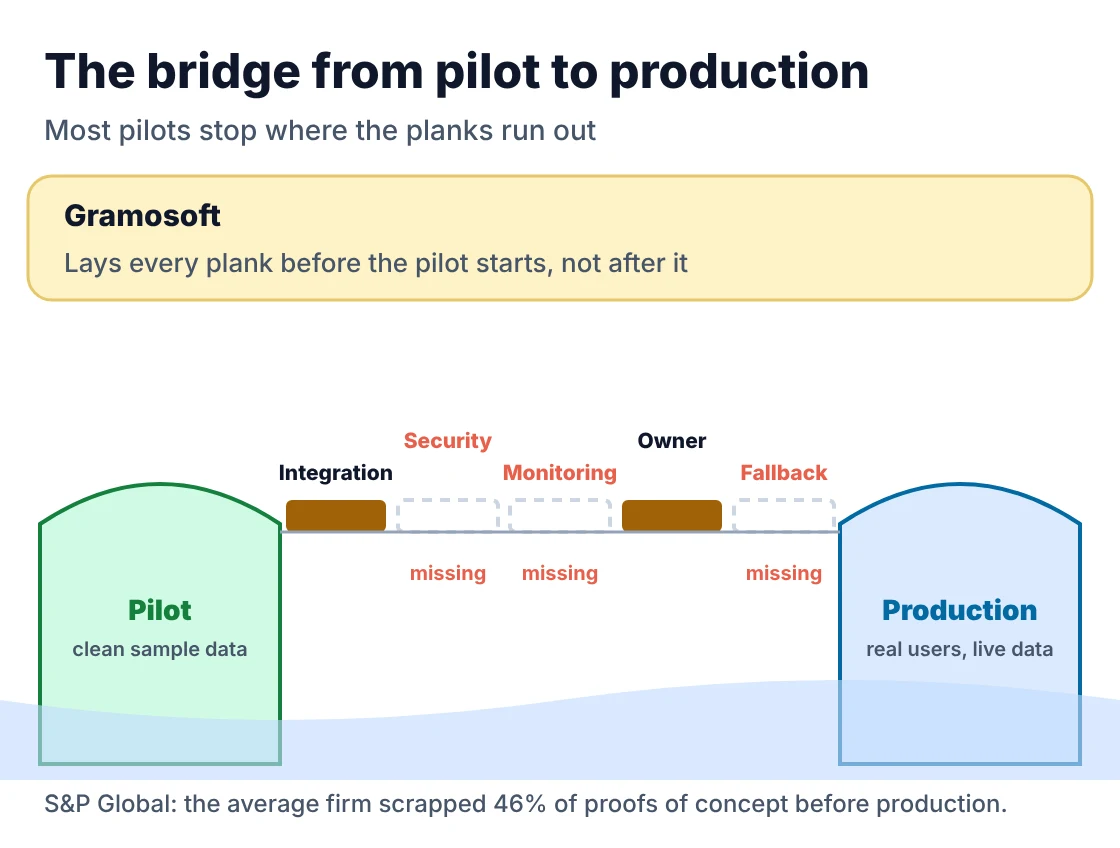
- Pilot gate: real users on real data, with the integration, security review and fallback to a person already in place.
- Run gate: monitoring, a named owner on your side, and a review date for drift and retraining.
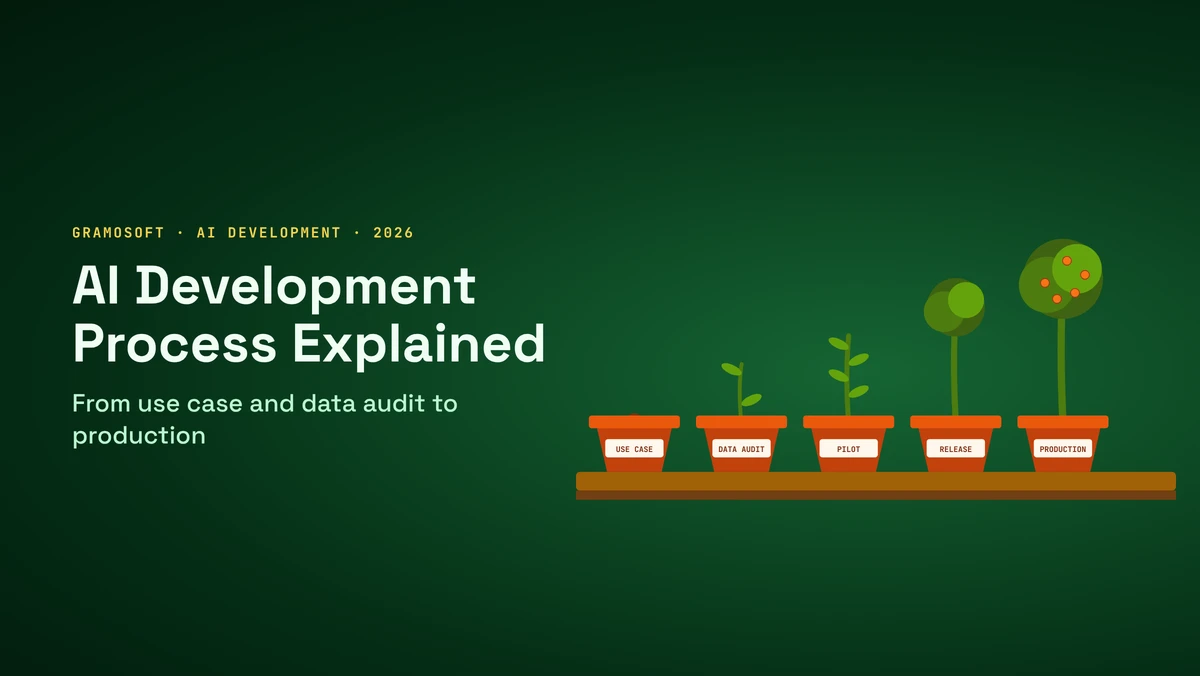
We build on systems we run ourselves: GdoczAI reads more than 100,000 documents a month for aviation clients, GsearchAI answers staff questions from company documents, and our Kia DMS automation saves an estimated 1,560 hours a year. Model choice stays open across Claude, GPT, Gemini, Llama and Mistral or on-premise. See our AI development services and AI Development Process Explained: From Use Case and Data Audit to Production.
Where we fall short. We do not train foundation models, we do not run organisation-wide AI strategy or change programmes, and factory computer vision is not our focus. We were incorporated in 2022, so our track record is shorter than older consultancies', and we publish no fixed price list.
"The cheapest AI project is the one you stop in week two because the data audit said no. We write the stop rule down before we write any code."
Rajesh Kannan M, Co-Founder & CTO, Gramosoft
How often AI projects really fail
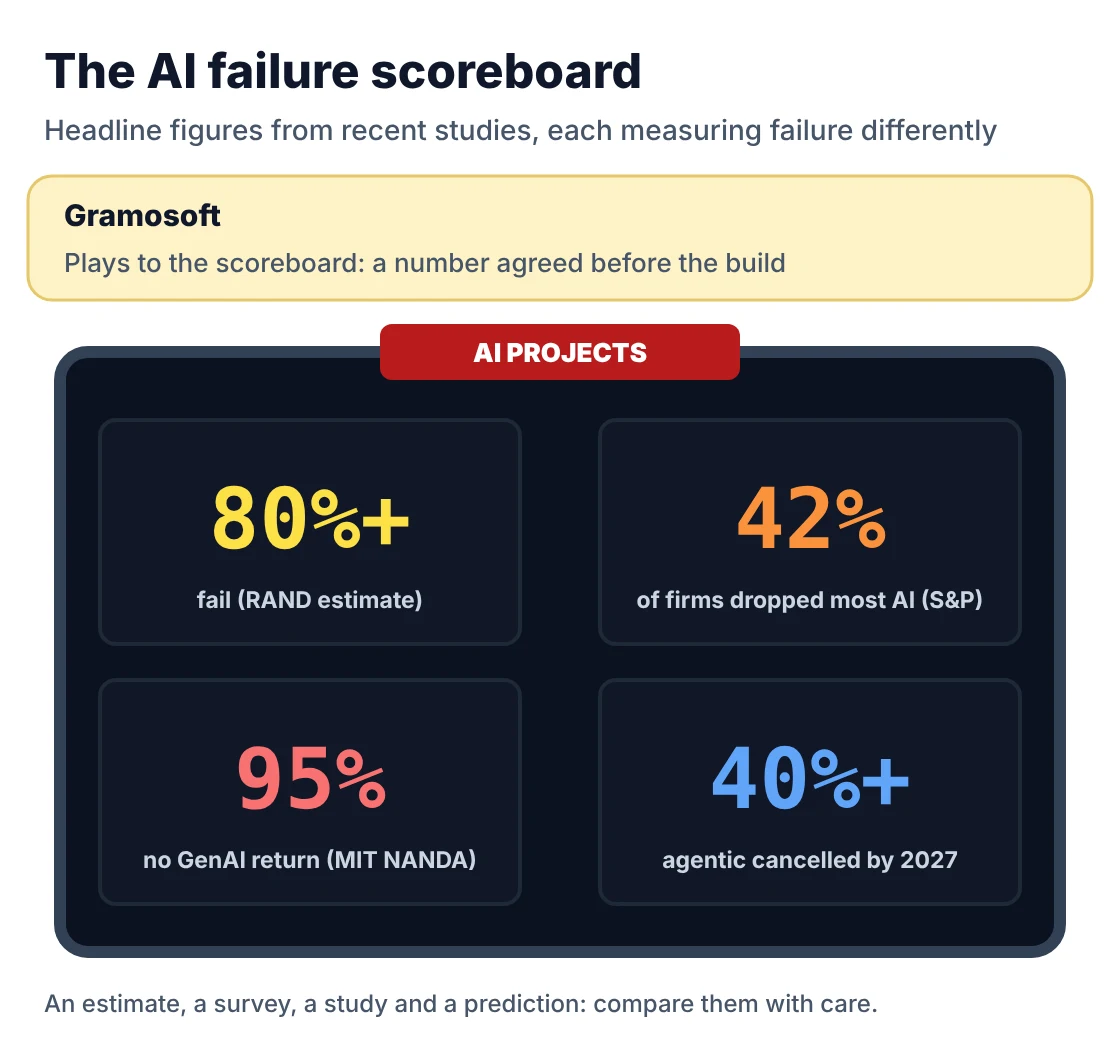
Failure numbers vary because each study defines failure differently: never reaching production, no measurable return, or being cancelled. Read together, they agree on the direction. Most AI projects do not deliver what was promised, and the share abandoned before production rose sharply in 2025 as generative AI pilots multiplied across companies.
| Source | Finding | What it measured |
|---|---|---|
| RAND, August 2024 | More than 80% of AI projects fail | Estimate cited by RAND; about twice the rate of IT projects without AI |
| S&P Global, 2025 | 42% of companies abandoned most AI initiatives, up from 17% | Survey; the average firm scrapped 46% of proofs of concept before production |
| MIT NANDA, July 2025 | 95% of organisations saw no measurable return from generative AI | Interviews, a survey and 300+ public deployments, as reported by The Register |
| Gartner, June 2025 | Over 40% of agentic AI projects will be cancelled by the end of 2027 | Prediction, citing costs, unclear value and weak risk controls |
| Gartner, November 2025 | More than 50% of generative AI projects fail | Conference session summary |
The useful study is RAND's: it interviewed 65 experienced data scientists and engineers about why projects failed, not just whether they did. Its five root causes run through the ten reasons below.
10 reasons AI projects fail, and how to avoid each
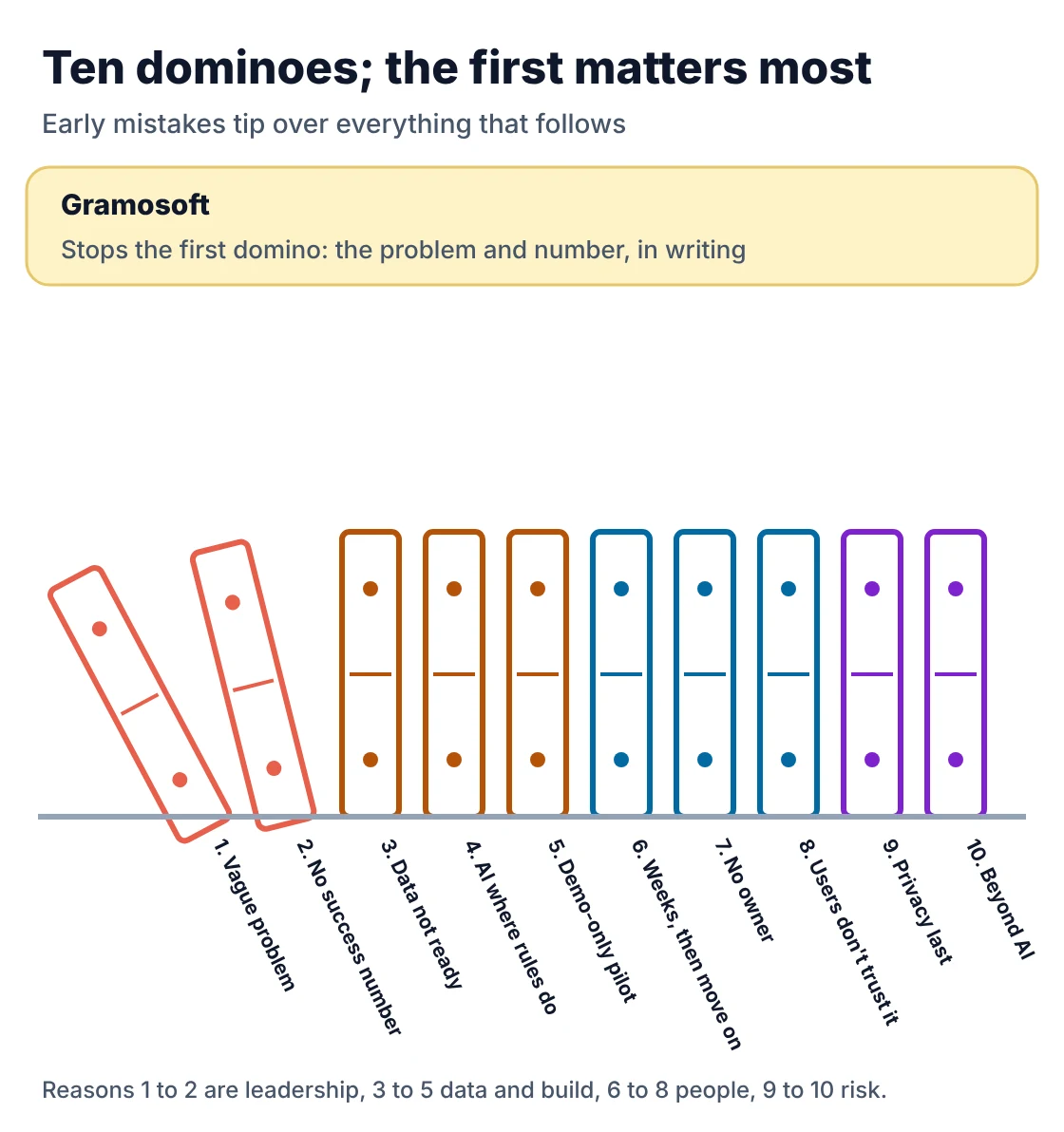
These ten reasons combine RAND's root causes with the patterns that consultancies and project-management bodies report most often. Most of them are decided before anyone trains or prompts a model, which is good news: they can be fixed with a written page, a data audit and a named owner rather than a bigger budget.
1. The problem is vague, or it is the wrong one
RAND found misunderstood or miscommunicated problems were the most common root cause; 84% of its interviewees cited leadership-driven failures. Its example: a leader asks for a model that sets the price that sells most, when the business needs the price with the best margin. The model works, and it optimises the wrong thing.
How to avoid it: write one sentence that names the user, the decision the AI supports and the business number it should move, and have the business owner sign it.
2. Nobody wrote down what success looks like
Without a number agreed in advance, every demo looks like progress and nobody can say whether the project worked. Improving and PMI both list undefined metrics and unclear return among their top ten reasons.
How to avoid it: record today's baseline, the target, a quality guardrail such as error rate, and a stop rule before sprint one.
3. The data is not ready
Data was the second most common root cause in RAND's study, and 30 of its 50 industry interviewees described persistent data-quality problems. Data kept for compliance or logging often lacks the context a model needs, and unbalanced data, such as very few examples of a rare event, leads to models that look accurate but miss what matters.
How to avoid it: audit sources, owners, completeness, labels and refresh rates before modelling, and budget for data engineering, not only data science.
4. AI is used where simple rules would do, or chosen for novelty
RAND describes leaders demanding AI for problems a few if-then rules could solve, and technical teams choosing the newest model or framework because it is exciting. Both produce systems that cost more to run and are harder to trust than the problem needed.
How to avoid it: ask first whether rules, a report or ordinary automation would solve it; choose prompting, retrieval or fine-tuning by the problem, as in Fine-Tuning vs RAG vs Prompting: Which Should Your Business Use?.
5. The pilot was built for a demo, not for production
A pilot on a hand-picked dataset can look excellent and then fail on live traffic, inside real systems, with security review, latency limits and edge cases. S&P Global found the average company scrapped 46% of its proofs of concept before production.
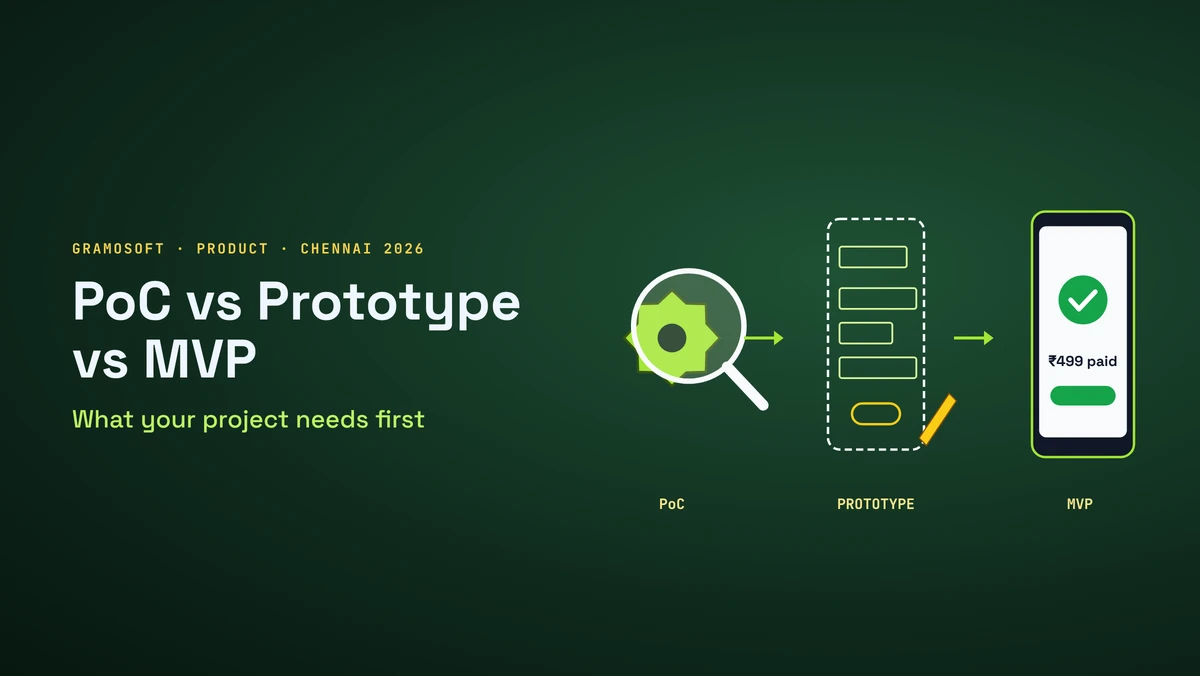
How to avoid it: plan integration, security, monitoring and a fallback to a person from the first day, and budget the production phase separately; see PoC vs Prototype vs MVP: What Your Project Needs First.
6. Leaders expect results in weeks, then move on
In RAND's study, 14 of 50 interviewees said leaders underestimated how long it takes to get an effective model, and many described priorities changing every few weeks. One said models are often delivered at 50% of what they could have been.
How to avoid it: commit a team to one problem for long enough to finish it; RAND suggests at least a year for a product team, with a first useful release far earlier.
7. Nobody owns the model after launch
Models degrade as data, prompts and user behaviour change. Without a named owner, nobody watches for drift, reviews odd outputs or decides when to retrain, and the system quietly loses trust until someone switches it off. ICANIO and Improving both list missing ownership as a core cause.
How to avoid it: name one accountable owner per model, set alerts on quality and cost, and put a review date in the calendar before go-live.
8. The people who should use it do not trust it
A model that changes how people work needs training, honest communication about what it decides, and a way to flag wrong answers. When staff cannot see how it helps, or fear it will replace them, they work around it, and RAND notes that subject experts sometimes resist AI projects for that reason.
How to avoid it: involve the users who will live with the system from the start, show them the evidence behind each answer, and keep a person in the loop for decisions that matter.
9. Privacy, bias and accountability come last
Biased training data and unchecked answers turn into reputational and legal problems. In February 2024 a Canadian tribunal held Air Canada liable for its chatbot's wrong advice on bereavement fares, rejecting the idea that the chatbot was responsible for itself.
How to avoid it: classify personal data at the start, log decisions, test for bias on the groups you serve, and use a framework such as the NIST AI Risk Management Framework; for Indian projects, see the DPDP section below.
10. The problem is beyond what AI can do today
Some tasks are still too hard, and vendor demos on the vendor's data hide it. RAND lists immature technology as a root cause, and Gartner says many projects labelled agentic do not need agents at all; it estimates only about 130 of thousands of agentic AI vendors are real. AIMultiple collects failures such as IBM's Watson for Oncology work at MD Anderson.
How to avoid it: test vendors and models on your own data in a short, paid PoC with a pass mark, and keep people on the decisions where errors are costly.
Warning signs that your AI project is heading for failure
Failing AI projects usually show the same signs months before anyone cancels them. If two or more of these apply to your project, pause new features and fix the foundation first. A two-week pause to repair the basics costs far less than a year of building on a project that will not reach users.
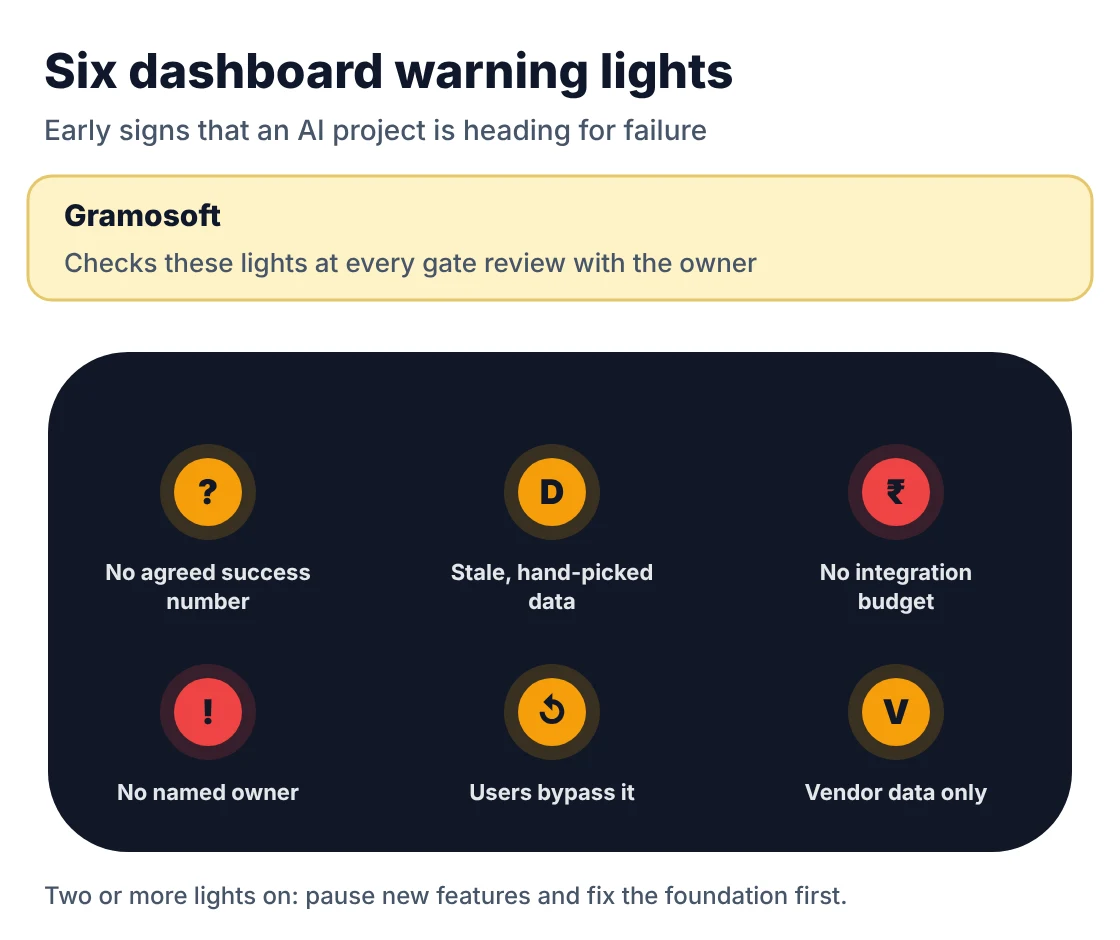
- Nobody can state the success number, or it changed after the results came in.
- The pilot dataset was hand-picked and has never been refreshed.
- There is no budget line for integration, security review or monitoring.
- Nobody can say who owns the model in production.
- Users work around the system, and override rates are rising without review.
- The vendor has only demonstrated on its own data.
To check a partner before you sign, use How to Choose an AI Development Company: 12 Questions to Ask Before You Sign.
What changes for AI projects in India
Indian AI projects face the same ten risks plus a new legal clock. The Digital Personal Data Protection Rules were notified in November 2025, and most duties for companies that handle personal data arrive in 2027. An AI system designed now should meet those duties from its first release rather than be rebuilt later.
- 13 November 2025: the DPDP Rules were notified and the Data Protection Board provisions took effect.
- 13 November 2026: rules for registering consent managers took effect.
- 13 May 2027: the main duties on notice, consent, security safeguards, breach reporting and data principals' rights apply.
For AI projects this means knowing which personal data the model sees, keeping consent and purpose records, logging access, and deciding early whether data may leave India; see Self-Hosted LLM vs API: Cost, Privacy & Performance for Indian Enterprises. This is not legal advice; check your obligations with a lawyer.
Frequently asked questions
How can a business avoid AI project failure?
Write the problem, baseline, success number and stop rule down before building, audit the data, plan production from day one and name an owner. Gramosoft runs every AI project through written gates for use case, data, PoC, pilot and run, so a project that misses its number stops early.
What percentage of AI projects fail?
Estimates vary with the definition. RAND cites more than 80%, about twice the rate of IT projects without AI. S&P Global found 42% of companies abandoned most of their AI initiatives in 2025, and an MIT NANDA study reported that 95% of organisations saw no measurable return from generative AI.
What is the most common reason AI projects fail?
Leadership and communication. In RAND's interviews, 84% cited leadership-driven causes such as solving the wrong problem, optimising the wrong metric, expecting results too fast or changing priorities. Poor or unsuitable data was the second most common cause.
Why do AI pilots fail to reach production?
Pilots are often built on clean, hand-picked data without integration, security review, monitoring or an owner. Production needs all of these, plus a fallback when the model is wrong. Budgeting the production phase separately and testing on live data early closes most of the gap.
How long should an AI project take?
A focused first release can reach users in weeks to a few months, but the problem needs a longer commitment. RAND recommends committing a product team to one problem for at least a year, because data work and improvement after launch take longer than most leaders expect.
Does India's DPDP law apply to AI projects?
Yes, whenever the AI system processes personal data. The DPDP Rules were notified on 13 November 2025, and the main duties on notice, consent, security and breach reporting apply from 13 May 2027. Design for them now; this is not legal advice.
When should you stop an AI project?
Stop or change course when it misses the pass mark agreed before the build, when the data audit shows the data cannot support the use case, or when a simpler approach does the job. Stopping early, against a written rule, is a success, not a failure.
Related guides
- AI Development Process Explained: From Use Case and Data Audit to Production
- How to Choose an AI Development Company: 12 Questions to Ask Before You Sign
- PoC vs Prototype vs MVP: What Your Project Needs First
- Custom AI Development Services: What You Can Build and What It Costs in India
- Fine-Tuning vs RAG vs Prompting: Which Should Your Business Use?
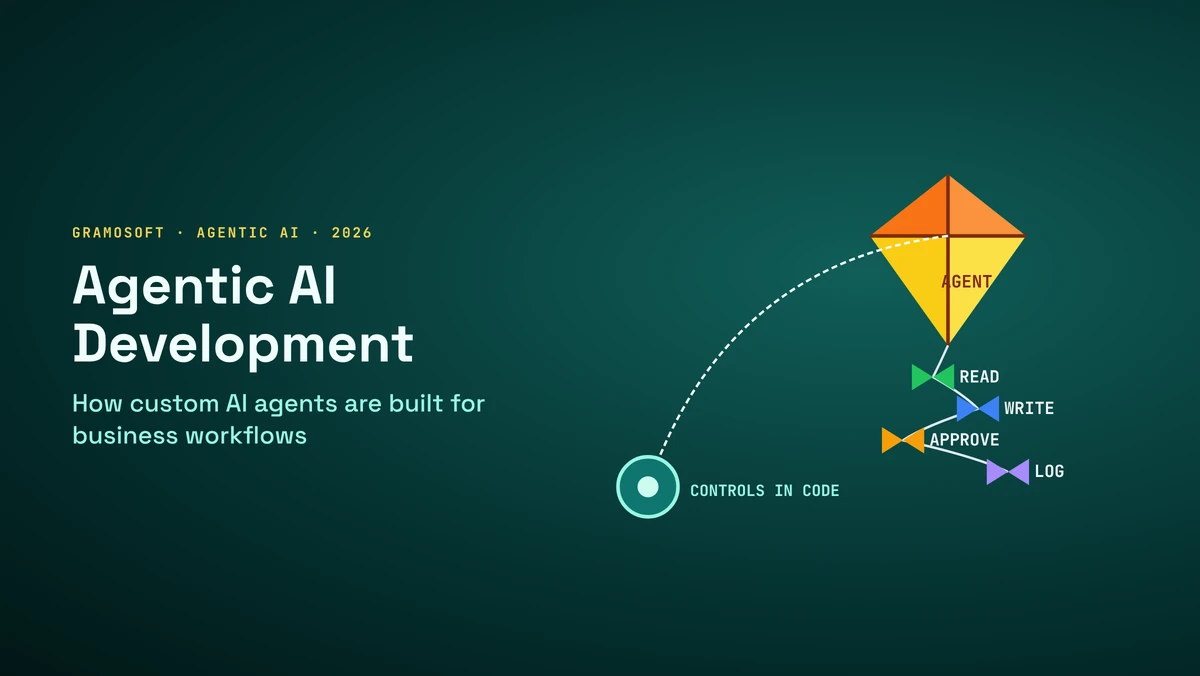
- Agentic AI Development: How Custom AI Agents Are Built for Business Workflows
- Self-Hosted LLM vs API: Cost, Privacy & Performance for Indian Enterprises
- How Much Does It Cost to Build an AI Agent in India? (2026)
- Top AI Development Companies in Chennai (2026)
Rajesh Kannan M
Rajesh Kannan M is Co-Founder & CTO of Gramosoft in Chennai, where he leads the teams building custom AI, document AI, enterprise search and automation, including GsearchAI, GdoczAI and GcrawlAI, an open-source web scraping, crawling and Search API platform for developers and AI agents, alongside web and mobile applications.